
Frozen Dumpling Packaging
Broken edges and frost can change dumpling handling. Review the frozen state, weight or count requirement, bag clearance and environment before coding options.
| Input or route | Material / evidence to provide | Decision to review |
|---|---|---|
| Product state | Frozen samples, temperature, frost and clumps | Define the material at the packaging boundary |
| Weight or count | Retail brief with governing quantity identified | Weighing does not automatically establish a fixed piece count |
| Bag and damage criteria | Film drawing and filled reference | Check cracks, broken edges and seal clearance |
| Environment | Room conditions and cleaning method | Confirm access, protection and site interfaces |
Choose the configuration from the product and package
Define the frozen condition and governing quantity requirement before assessing the published weighing and VFFS route. Review product damage and bag clearance along the whole line, then confirm environment, cleaning and coding details.
On This Page
Document the dumpling at the packaging boundary
A frozen-dumpling enquiry should describe the product at the point where it enters the proposed line. Include dimensions, shape variation, surface frost, and any loose pieces or clumps. Explain how the line connects to the upstream process and what condition the product is in during normal production. The supplier cannot work out these details from the word "frozen" or from a retail photograph.
The catalog's prepared-food VFFS configuration combines multihead weighing with vertical bagging, and its contact-surface and handling options need confirmation. It gives a basis for reviewing dumplings. It is not a blanket approval for every dough shape or filling. Supply samples that represent the commercial range. If several dumpling sizes share one nominal bag weight, list them separately, because they may pass through feeders, hoppers and the bag opening differently.
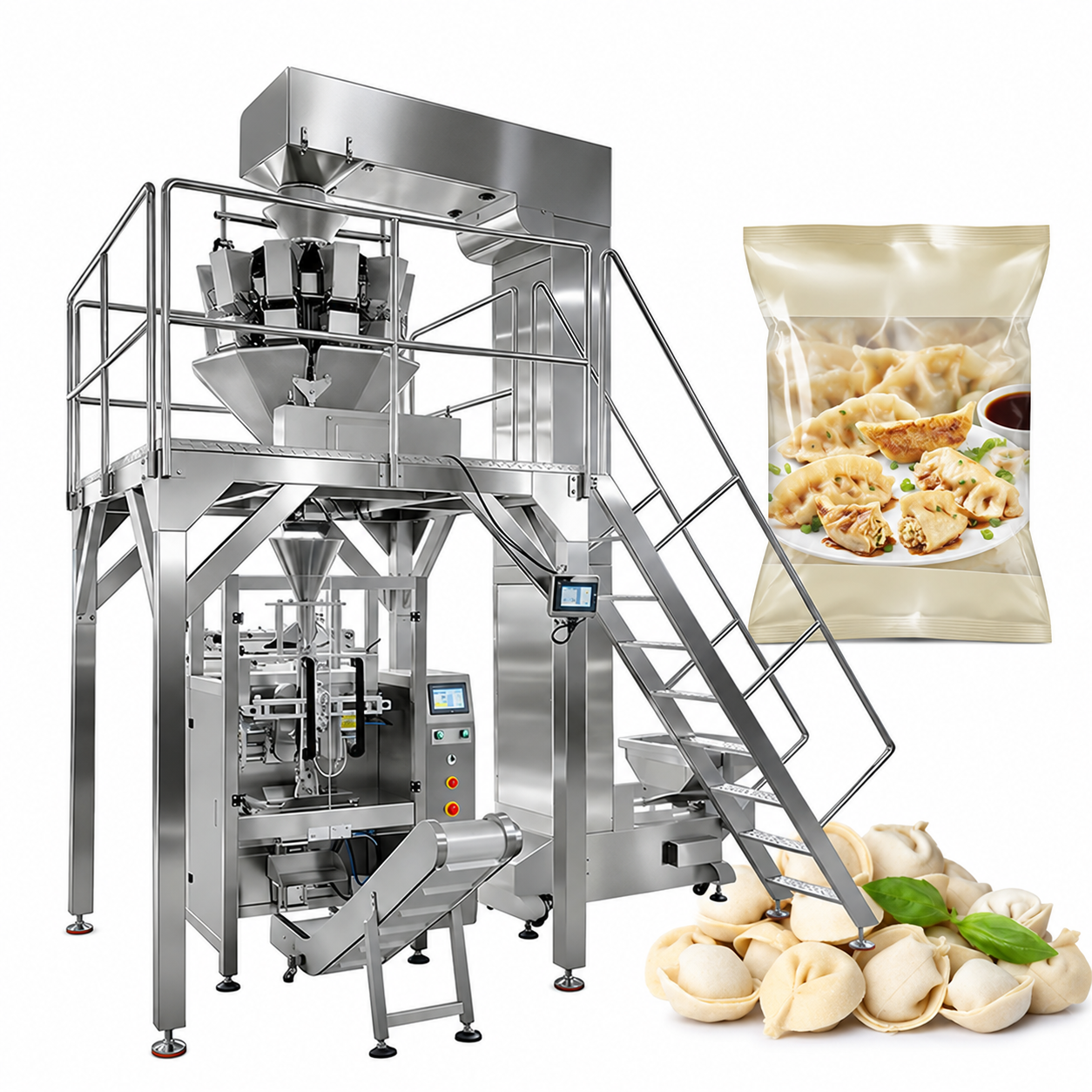
Clarify quantity when pieces vary in size
If the retail brief gives both a bag weight and a dumpling count, say which requirement governs and how the other will be assessed. A weighing configuration does not automatically control an exact piece count when individual dumplings vary. The supplier should explain the proposed dosing basis and any separate functions a count requirement would need. Keeping the two expectations distinct makes the sample review fair. It also stops the acceptance criteria from changing after the demonstration.
Define the defects that the trial should reveal
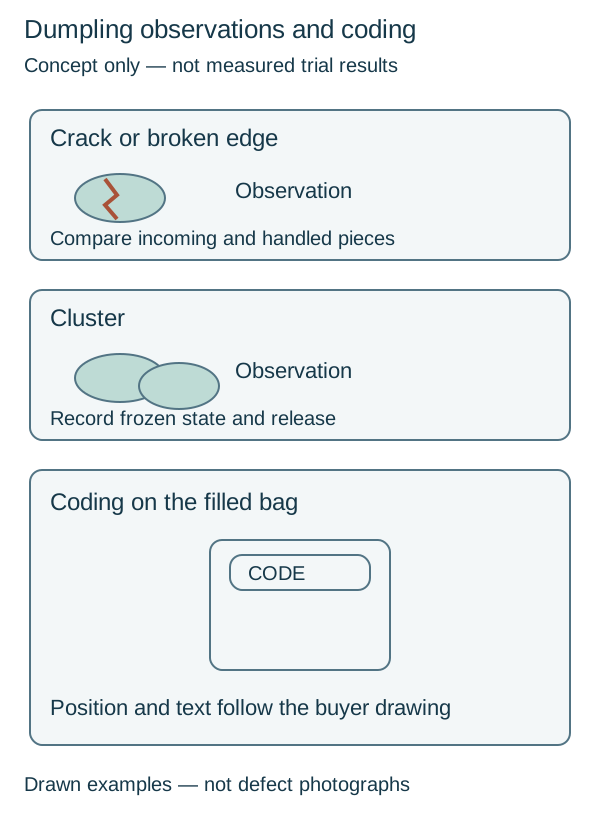
Agree what counts as an unacceptable change to the dumpling. Cracks, broken edges, opened seams and persistent clusters are examples to discuss, and you should pick the observations that matter for your product. Examine the incoming samples first, using the same criteria. That baseline stops pre-existing damage from being blamed on the proposed packaging route.
Compare the product condition after the agreed handling sequence and keep each result tied to its run. If changes appear, look at the relevant transfer points, because the bagger is not the only possible source. A weighing result can be fine while the product condition is not. Keep those findings apart in the trial record. The supplier can then propose a targeted handling change, and you can judge its effect against one consistent definition of quality.
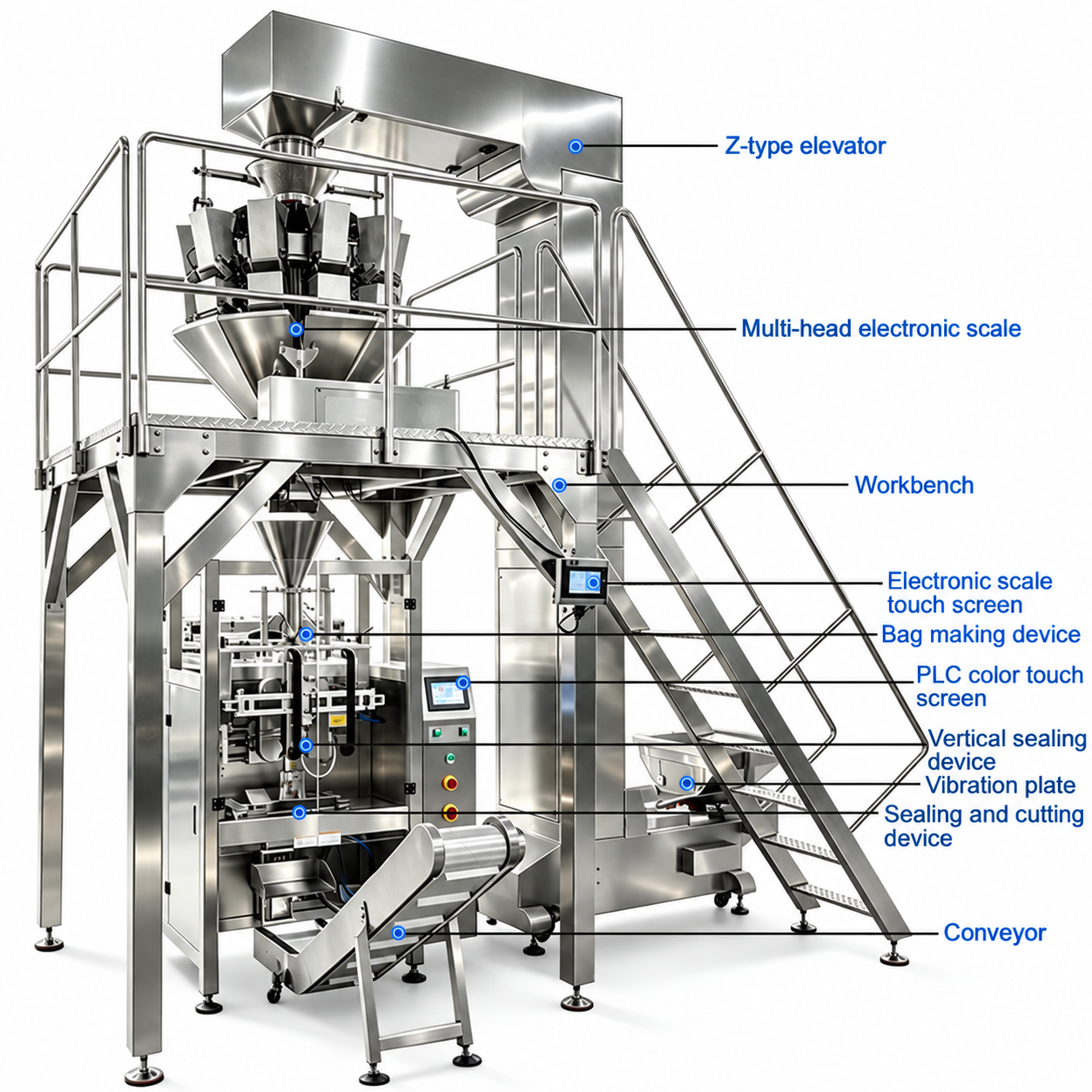
Include the elevator and platform in the review
A frozen-dumpling line may include supply conveyors, an elevator, a working platform and an output conveyor on top of the weigher and bagger. Confirm what is actually in the proposed scope. Review the product route and operator access on a dimensioned layout that shows your factory height and the connections to existing equipment. The footprint of the central machine does not describe the whole installation.
The supplier should show each transfer point running with representative dumplings. Watch contact, release and clearance, especially where the product changes direction or drops into another component. If you select a dimpled surface option, record which parts use it. The aim is to understand the arrangement that was demonstrated. A named surface finish does not solve every problem with frost, moisture or fragile edges along the line.
Keep trial handling representative and documented
Agree how frozen samples will reach the demonstration and how their condition will be recorded. A demonstration on product in a materially different condition has limited value. It should be labeled that way. If the frozen state you intend cannot be reproduced well enough at one location, list the confirmation work still to do. Do not present the substitute run as final acceptance.
Watch startup, replenishment and normal pauses as well as stable running. Record changes in product condition and every intervention by the demonstration team. Label finished samples by run stage and configuration. These details help explain variation without guessing at its cause. The acceptance record should say what the trial actually represented and where later confirmation is needed under your installation and product conditions.
- Representative frozen samples and temperature information
- Frost, clumping and size variation
- Product-damage and fill-quantity criteria
Review bag dimensions with the dumpling shape
Send the film specification, bag drawing and a filled reference pack. Include the target quantity, print repeat, seal margins and opening feature. Irregular dumplings must pass through the filling path and clear the sealing area, which external bag dimensions cannot tell you. Ask to see the full filling and closing cycle with the real product.
Inspect consecutive packages for trapped pieces, visible damage and the distribution you want inside the bag. If the portion or bag size changes, review the clearance again. Keep packaging-material revisions attached to the trial samples they belong to. No article can give universal sealing settings for every film and frozen condition. Those settings and checks belong to a documented configuration worked out with the equipment and packaging teams on representative material.
Give batch coding a clear place on the dumpling bag
The prepared-food configuration covers bag forming, weighing, filling, sealing and date printing in one sequence. For a frozen-dumpling project, put the print requirement on the same drawing as the bag dimensions. A proposal that simply lists a coder does not tell you where the code will land, or whether your full batch information fits there.
Mark the coding panel on the film artwork and provide a sample of what the factory expects to print. The supplier should be able to show the proposed print position on a filled bag, including how the folds and the final closure change the visible area. Read the code in the orientation operators and customers will normally handle the pack. If the artwork changes, bring the coding panel into the revision discussion.
Check the coding during the packaging trial, not just on a separate flat-film sample. Collect marked bags during the agreed run and keep their batch information with them. Production then gets something concrete at handover: an approved bag layout, a defined coding function and a sample showing how the information looks on the finished dumpling pack.
Specify environment and cleaning requirements directly
Provide the room conditions and the cleaning method planned for the installation. Get written information on the proposed equipment protection, contact access and utility interfaces. Stainless construction and general sanitary wording on a product page do not establish an environmental rating or a cleaning capability. Review the final configuration against your actual factory process.
You remain responsible for your own product handling and sanitation procedures. Equipment selection should show whether the proposed arrangement can support them, and flag any interface that is still unresolved. Include access around elevated components, film loading and product replenishment in the layout. A mechanically compact arrangement is a bad buy if it leaves too little practical space for the work the factory has to do during production and scheduled cleaning.
Compare acceptable output under the stated conditions
The trial team should record acceptable completed bags, interruptions and rejected samples over the observed period. Define acceptance using the agreed quantity, product-condition and package checks. An empty-machine cycle rate does not give output for a particular dumpling and bag. A good result on one frozen product also does not carry over automatically to every bun, rice cake or meatball in a broader catalog.
Method, sources and applicability
This page reorganizes the published frozen dumpling packaging application and the linked equipment descriptions into a purchasing brief. The comparison is based on public configuration information, not our test of the alternatives. The observation tables are blank records to complete with the actual product; they contain no measured results. The questions below come from the purchasing issues already discussed on this application page, rather than a new search-question survey.
Substitute sample conditions leave final frozen-product confirmation open. The published configuration establishes neither a universal environmental rating nor release on every dough shape. Cleaning suitability, any count-specific function and the final film settings require project-specific confirmation.
Technical Reading
- Frozen-food VFFS — Published configuration or planning guidance; reviewed 8 October 2026. review weighing and complete line scope.
- Frozen-product packaging — Published configuration or planning guidance; reviewed 8 October 2026. document the condition used in the trial.
- Fragile-product handling — Published configuration or planning guidance; reviewed 8 October 2026. compare incoming and handled damage.
- Packaging output targets — Published configuration or planning guidance; reviewed 8 October 2026. count acceptable bags under recorded conditions.
- Configuration review scope — Basis for the proposed-scope and missing-information response; reviewed 8 October 2026.
- Sample testing arrangements — Confirm availability, sample quantity, handling and costs before shipment; reviewed 8 October 2026.
Frequently asked questions
Can one machine cover several dumpling sizes?
List each size and its frozen condition separately. Ask which combinations were assessed and which feeder, hopper, discharge or format parts differ. A common bag weight does not make shape and clearance interchangeable.
Does a dimpled hopper guarantee release?
No. Identify the components using that option and assess frost, clumps and release with the actual frozen product. Keep sample condition and transfer observations with the result rather than relying on the surface name.
Can a weight requirement also guarantee an exact dumpling count?
Not automatically when individual pieces vary. State which requirement governs and record weight and count separately during evaluation. Any additional function needed for a count requirement needs explicit confirmation; it is not established by the weighing listing.
Explore the Equipment
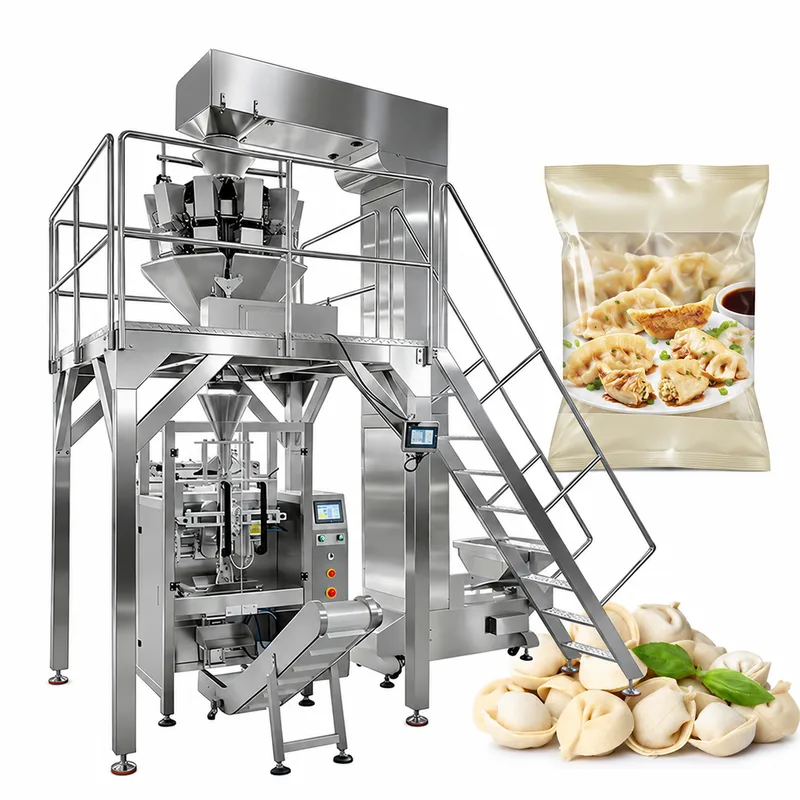
Vertical Form Fill Seal
Frozen Food Weighing & Packaging
Frosted pieces retained in a hopper can leave a bag underweight and turn up in later fills. Specify this frozen-food weigher and VFFS line from product temperature, frost, piece size and cleaning method.
What to send us
| Item | Why we need it | Example format |
|---|---|---|
| Frozen sample and temperature | Represent the condition entering the line | Batch label + temperature/handling record |
| Frost, clumps and size variation | Identify the difficult handling combinations | Labeled photos and sample list |
| Damage and quantity criteria | Separate product condition, weight and count | Acceptance sheet naming the governing quantity |
| Environment, cleaning and bag | Review protection, access and packaging interfaces | Room brief + cleaning note + film PDF |
We reply within 24 hours.