
Frozen Food & Vegetable Packaging
Grouping frozen pieces with fresh leaves can hide handling requirements. Define product state, volume and cleaning needs before selecting a bagging route.
| Product and source configuration | State and volume inputs | Cleaning and environment inputs |
|---|---|---|
| Frozen dumplings — Frozen-food VFFS, linked above | Temperature, frost, clumps, largest piece and filled-bag volume | Describe factory cleaning method and packing-room conditions |
| Frozen vegetables — Vegetable VFFS, linked above; assess the actual frozen material | Frozen state, piece range, clumping and occupied volume | Record the required method and environmental interfaces |
| Fresh leaves — Vegetable VFFS, linked above; no automatic transfer of frozen-product approval | Leaf size, surface moisture and bulky filled sample | Record fresh-product process and cleaning requirements separately |
Choose the route before specifying the equipment
Keep frozen dumplings, frozen vegetables and fresh leaves in separate material records. Match each to the published configuration only after its state, occupied volume and installation conditions are described.
On This Page
Connect the frozen-food bagger to the rest of the line
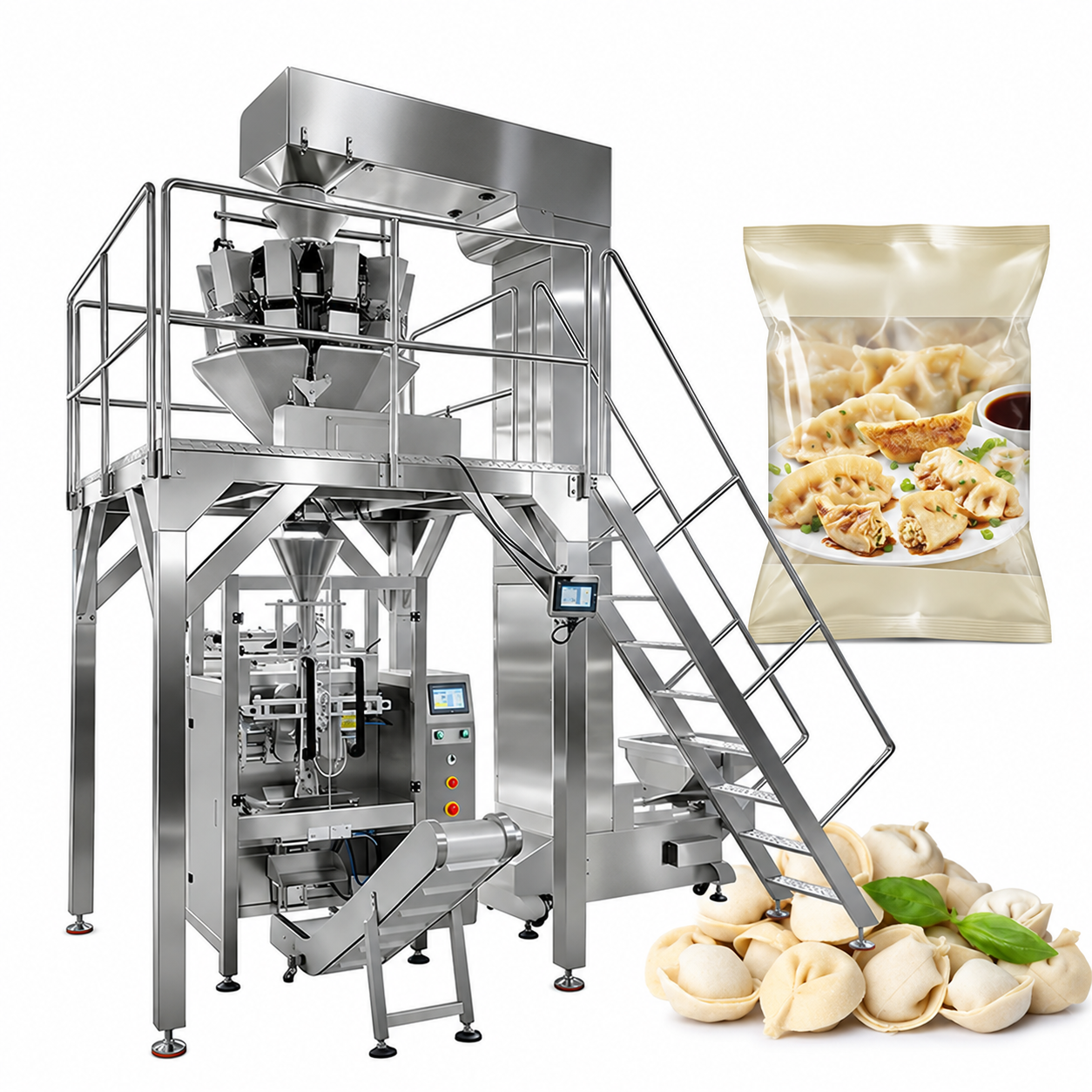
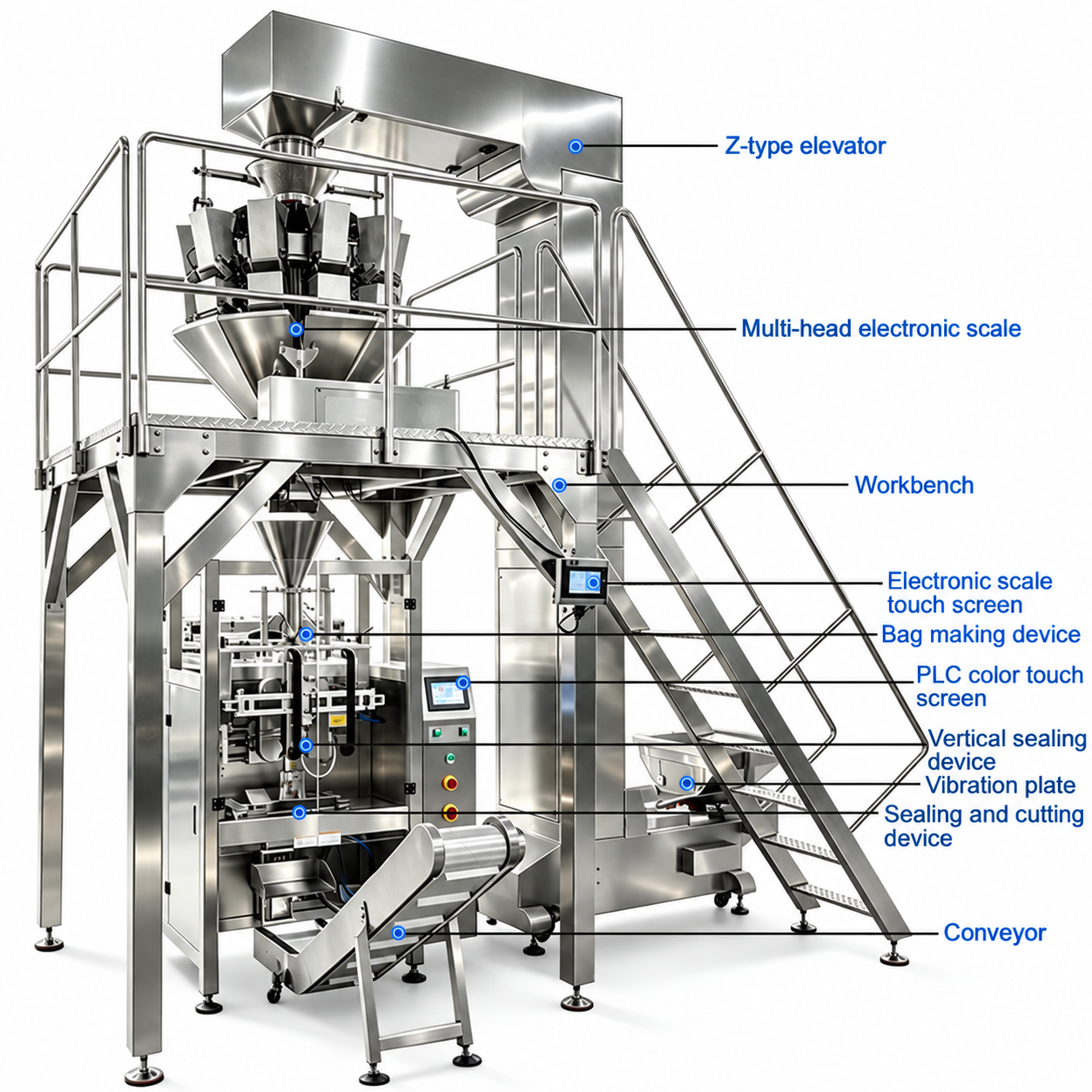
The prepared-food catalog shows a multihead weigher above a vertical bagger, with supply equipment, working platforms and output conveyors available as part of a configured line. For frozen products those surrounding pieces matter. The product route starts before weighing and carries on after the bag closes. Your layout should show how incoming dumplings, buns, meatballs or vegetable pieces reach the distribution point, and where finished bags go next.
A useful drawing marks three zones clearly: incoming product, elevated weighing and sealed-bag discharge. Add the heights of existing equipment, overhead obstructions and the space needed to reach the film roll. If you want inspection equipment, show where it would go and whether it is part of the packaging supplier's offer. It does not automatically come with the central bagging machine.
If the factory runs several frozen recipes, attach the relevant product to each route on the drawing. A bulky bun and a smaller vegetable piece can share a destination and still need different handling reviews. Drawing this out turns a broad frozen-food enquiry into a defined installation discussion. Missing conveyors or support structures show up before the commercial scope is final.
Frost, flow and washdown in frozen packing
Frozen dumplings, meatballs and vegetables can differ a lot in surface frost and flow. Leafy products add volume and bridging problems. Plan the contact surfaces, cleaning procedures and electrical protection around your actual production environment.
Temperature, frost and room conditions to report
Product temperature, frost condition, cleaning method, room conditions and bag dimensions.
Separate frozen prepared foods from fresh vegetables
Frozen dumplings, frozen vegetables and fresh salad may sit together in a broad equipment catalog. But each needs its own product definition. Record the material that actually enters the line, its condition, and the point where packaging follows the upstream process. Include size variation, clumps, surface moisture or frost, and how the product is supplied. With these details the supplier can understand the handling task without guessing compatibility from a category name.
The catalog offers multihead weighing and vertical bagging configurations for frozen prepared foods and for vegetable applications. Use the stated applications as a basis for discussion. A proposal for hard frozen pieces must not quietly turn into a proposal for delicate leaves. Even where parts of the machine architecture are shared, check the feeding volume, contact surfaces and environmental requirements against each product you plan to pack.
Document the installation environment
Provide the planned room conditions and the cleaning method your factory uses. Show where product enters the packaging area and how the proposed machinery will connect to the existing line. Describe any variation during production or cleaning. So the supplier can work out the equipment protection and access arrangements you need. A photograph of a stainless machine tells you none of this.
Get a written explanation of the proposed configuration. A catalog description does not give you an environmental rating. In the layout review, include the electrical interfaces, access to contact parts and the location of utilities. Product-process and sanitation requirements belong to your own validated procedures. Your job as the buyer is to establish whether the equipment arrangement can support those procedures, and to find unresolved requirements before installation planning is final.
Review handling of frozen pieces
For dumplings, buns, rice cakes or meatballs, decide which visible changes matter: cracks, broken edges, deformation or unwanted clumps. Examine representative incoming product before the demonstration. So the trial has a useful baseline. Check how the proposed elevator, feeder and weigher work together. The bagger alone does not account for the whole handling route.
Follow every transfer into the finished bag and compare samples at agreed points. If a surface option is proposed to improve release, record which parts use it and test those parts with the actual frozen product. A smooth run with dry demonstration material does not predict how frost or moisture will behave. The goal is a documented match between known product conditions and the handling arrangement supplied, with any remaining limits described.
Treat leafy volume as a separate selection problem
Fresh leaves and bulky vegetable cuts can take up a lot of space for their target weight. Supply a representative mixture and an actual filled package. Describe the leaf size range, surface condition and any variation in the upstream feed. The supplier should relate the proposed hopper and discharge arrangement to the volume being handled, not only to the weighing range.
Watch for bridging, retained leaves and the condition of the product after transfer. Record whether the mixture stays acceptably distributed in the finished bag. Check the package opening and sealing area for trapped leaves. These observations cover the packaging operation only. Product preparation, storage conditions and the shelf life of a fresh salad need their own assessment. A line that weighs and seals a sample does not establish the whole fresh-food process.
Review film under the intended packing conditions
Provide the packaging material specification, dimensions and print repeat. Agree how the film and filled product will be presented during the demonstration. A bag material tested in unrelated conditions may leave questions open about your line. Put coding, seal margins and the desired opening feature on the same drawing used for the machine configuration.
Keep a record of the product condition and material revision behind each finished sample. Look at bag appearance, sealing area and product clearance together. When a bag dimension or quantity changes, review the occupied volume and the handling again. Your packaging team should agree the package checks that apply. An application article cannot give universal sealing settings. The actual material and supplied equipment need a documented setup established through the right trial.
- Frozen product condition, clumps and loose ice
- Piece handling and protection of the seal area
- Cleaning requirements and package evaluation
Measure the complete packaging sequence
A useful trial follows the product from supply to the collection of completed bags. Record interruptions and operator interventions next to the accepted output. Work out whether pauses come from upstream product availability, retained material, bag formation or downstream collection; that helps a purchasing team compare proposed systems without pinning every limitation on a single component.
Use samples that reflect the planned product range, and name any condition the trial cannot reproduce. If a remote demonstration cannot keep representative frozen handling, state the limitation and agree how it will be resolved. Keep labeled finished packs and the run notes that go with them. The result should describe the observed period and configuration. It is not an unconditional speed or quality claim for all prepared foods, room conditions and production shifts.
Ask questions that resolve the remaining boundaries
Before you approve a quotation, confirm the included feeding equipment, platform, conveyors and format parts. Review the space needed for access and the product route through the factory. Settle who supplies the film, the utilities and any separate process equipment. A layout can be mechanically compact and still have no practical room for cleaning access, replenishment or finished-bag collection.
Can one line handle frozen dumplings and leafy salad? Ask for separate assessments of the actual materials and of the parts each needs. A category-wide promise is not an answer. A successful trial does not prove the product's storage life. It shows defined packaging observations under recorded conditions. Keep those observations in your purchasing file next to the open product-process questions and a plan for confirming the final configuration.
Use an interface sheet for product handoff
Draw the exact point where the upstream process hands product to the packaging line, and the point where completed bags leave it. At each interface, note the proposed equipment, the available space and the information still missing. This pays off most when a freezer, a preparation line and a bagging system come from different suppliers.
Record the product condition you expect at the first point and the collection method you plan at the second. Have everyone review the same drawing revision. The interface sheet does not prescribe the food process. It spells out the mechanical and operational boundaries the equipment proposal has to cover. It also makes it easier to tell whether a trial interruption came from product supply, packaging or downstream handling.
| Interface | Product or package state | Station, owner and open question |
|---|---|---|
| Upstream handoff point ___ | Temperature/frost/clumps ___ | Packaging receiving station ___; owner ___; question ___ |
| Packaging discharge point ___ | Completed-bag collection method ___ | Downstream equipment ___; owner ___; question ___ |
| Drawing revision ___ | Room conditions ___; cleaning method ___ | Access requirement ___; responsible party ___ |
Method and limits of this comparison
Scope: Frozen Food & Vegetable Packaging. Configuration records: frozen-food-vffs, vegetable-vffs. This October 2026 revision organizes the published configuration descriptions and the buyer checks discussed on this page. The configuration source links near the opening identify the records behind the comparison. This is a selection aid compiled from published information, not a report of our own trials.
For Frozen Food & Vegetable Packaging, use the stated parameters only for the named configuration and its original conditions. Missing values remain open; photographs and edited catalog illustrations do not qualify an untested material or establish a storage-life, cleaning or performance result. Keep project-specific evidence with the final quotation.
Frequently asked questions
Can frozen dumplings and fresh leaves share a line?
Request separate material and contact-part assessments, including feed volume and the intended room conditions. Keep the assessed combinations explicit rather than accepting category-wide compatibility.
How should I describe cleaning requirements?
Provide the factory’s actual method, contact-part access needs and environmental conditions. Ask the supplier to state the protection and access arrangements for the quoted equipment; do not infer them from a material photograph.
Does a packaging trial establish cold-chain storage life?
No. It records packaging observations under named conditions. Product preparation, storage and distribution-life evidence remain separate process and quality questions.
Explore the Equipment
Vertical Form Fill Seal
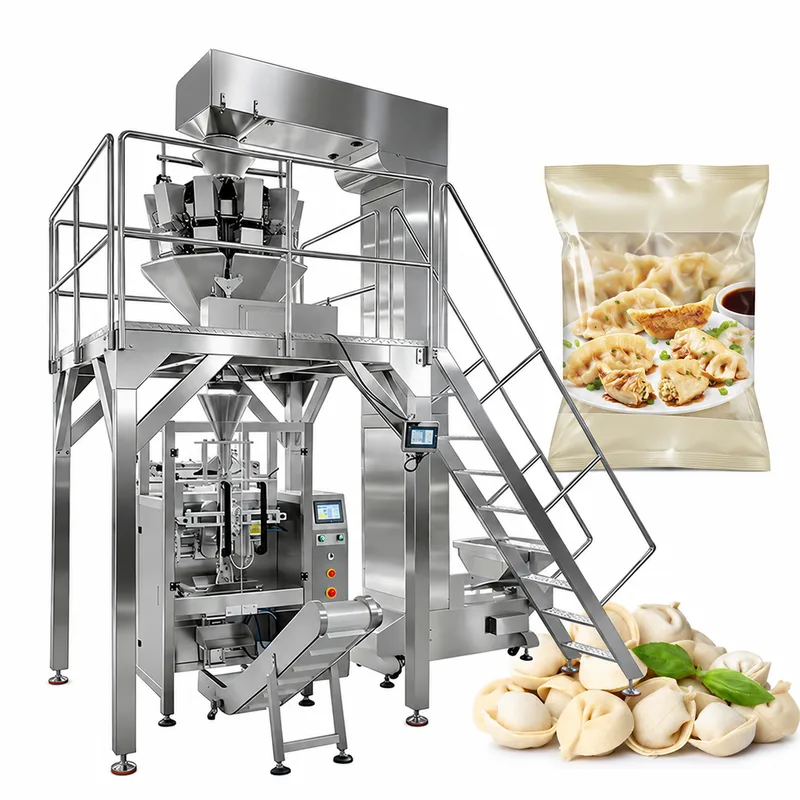
Frozen Food Weighing & Packaging
Frosted pieces retained in a hopper can leave a bag underweight and turn up in later fills. Specify this frozen-food weigher and VFFS line from product temperature, frost, piece size and cleaning method.
Vertical Form Fill Seal
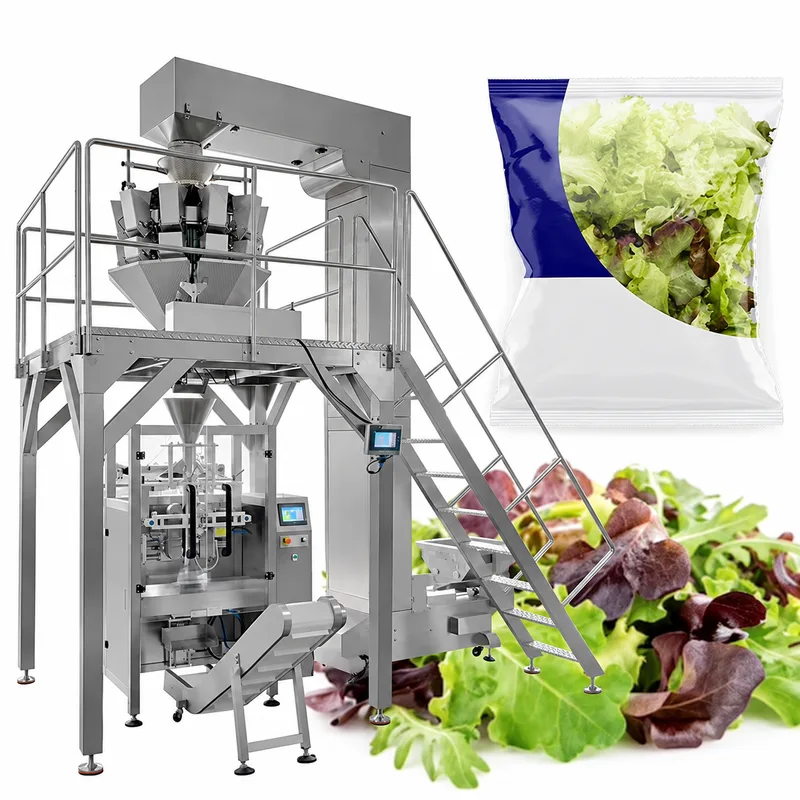
Vegetable & Salad Weighing Packaging
Fresh leaves and frozen vegetables need separate checks of hoppers, surfaces and cleaning; sharing an unproven setup can damage salad or hold up frosted pieces. Specify this weigher and VFFS line per product condition.
What to send us
| Item | Why we need it | Example format |
|---|---|---|
| Temperature, frost and clumps | Describe the product arriving at packaging | Condition log with labeled photographs |
| Largest pieces and occupied volume | Identify handling and filling-clearance checks | Representative samples and filled-pack drawing |
| Cleaning and room conditions | Define access and environmental questions | Factory procedure summary and room-condition sheet |
| Layout and handoffs | Assign upstream, packaging and downstream boundaries | Annotated interface drawing with responsible parties |
We reply within 24 hours.