
Leafy Salad Packaging
Trapped leaves and bruising can reject a correctly weighed salad bag. Review leaf size, loose volume, moisture and seal clearance on the actual fresh mixture.
| Input or route | Material / evidence to provide | Decision to review |
|---|---|---|
| Leaf type and cut | Production mixture and size variation | Check large leaves along the whole route |
| Loose volume | Target mass and filled reference | Relate hopper occupancy to the actual mix |
| Moisture condition | Condition at the feeder | Keep release observations representative |
| Seal clearance | Film drawing and filled bag | Observe the last leaves before closure |
| Damage definition | Incoming and handled samples | Separate tears, bruising and mixture distribution |
Choose the configuration from the product and package
Use the vegetable VFFS arrangement as a starting point for a fresh-leaf-specific path review. Compare representative leaves with the distribution, feeding, hopper, collection and bag-entry geometry before selecting film or tooling.
On This Page
Describe the salad mix as a handling material
A leafy-salad project begins with the mixture that is delivered to the packaging line. List the leaf types, cut sizes and the normal variation in surface condition. Explain whether the product arrives evenly distributed or in intermittent batches, and point out any larger pieces that strain existing handling. Supply representative samples, not a carefully arranged retail display. The machine review has to see the production material.
The vegetable weighing and VFFS configuration is a starting point for discussing fresh leaves. It does not establish suitability for every salad formulation or upstream preparation process. Keep fresh salad apart from frozen vegetables, even where a catalog puts them in one broad category. Their product condition, occupied volume and handling goals call for separate assessment. State which mixtures must run on the line and which are only future plans.
Show volume alongside the target mass
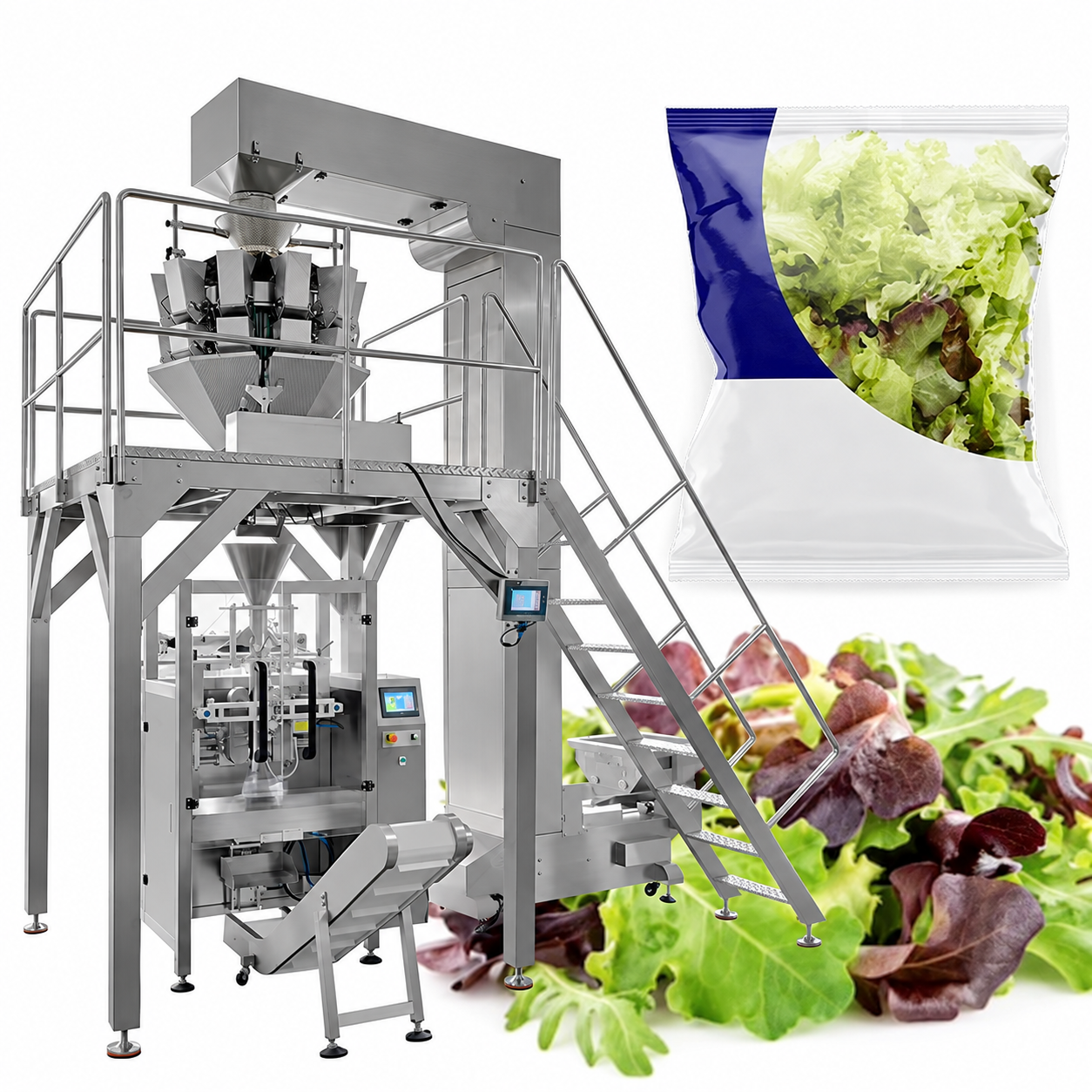
Leaves can take up a lot of space for a modest pack weight. Send a filled bag and describe how it was prepared, including the appearance you expect at retail. The supplier should relate hopper volume, feeder arrangement and the filling path to your actual mixture. A weighing-range figure alone does not show how a bulky leaf portion will travel into the bag.
If several mixes share one package, compare their occupied volume with one consistent method. A mix with larger leaves may need a different clearance discussion from a finely cut blend at the same mass. Tie each observation to the sample it came from. Before you fix the film order, review the usable bag space and sealing area with the real leaves; that links the package design to a demonstrated product route, and not to an assumed capacity.
Ask for a leaf-specific feeder and discharge proposal
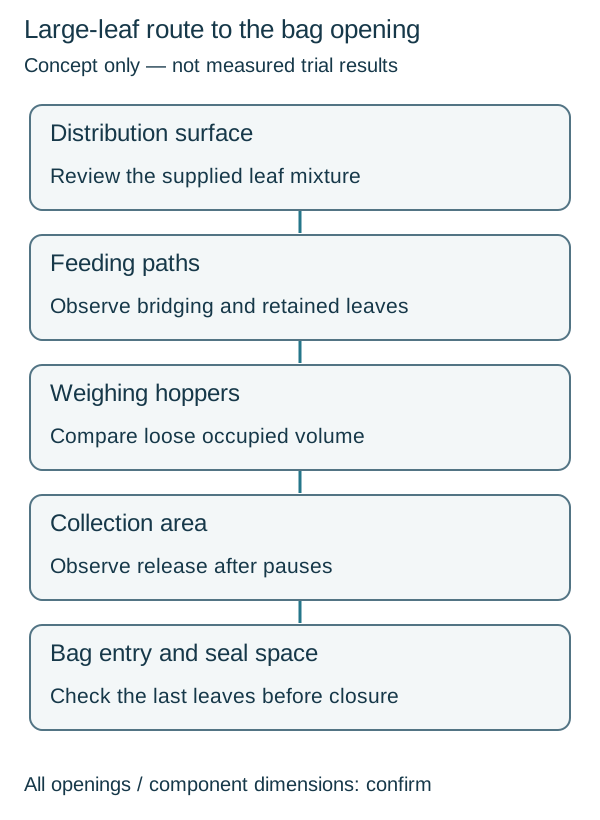
The vegetable catalog pairs a multihead weigher with VFFS and describes textured contact surfaces and customized feeding arrangements. For leafy salad, turn those features into a drawing of the actual product path. Mark the distribution surface, the individual feeding paths, the weighing hoppers, the collection area and the entry into the formed bag. Large leaves travel this whole sequence, even when they add little to the bag weight.
Use that drawing in a sample discussion. Lay representative whole leaves and the normal cut mixture next to the relevant component dimensions, and ask the supplier which openings or surfaces were chosen for that material. If your range includes both spinach-type leaves and larger salad cuts, get a clear account of the shared arrangement and any proposed changes. A photograph of a machine running compact frozen vegetables does not make a fair comparison.
What you want at the end is a contact-path specification tied to your salad samples. It should name the selected surface treatment and the important transfer points. Later equipment reviews become more precise, because the buyer can point to the intended leaf route and not to a broad promise of vegetable compatibility.
Examine bridging and retained leaves
Follow the product from incoming supply through the feeder, weighing hoppers and discharge path. Watch for leaves that bridge an opening, stay on a surface or release later than the main portion. Find out which contact and feeding options are proposed for your mixture. A configuration called suitable for vegetables still needs a demonstration with leaves.
Document where retention happens and the conditions around it. Put normal pauses and replenishment into the observation plan, so you are not looking only at uninterrupted running. The equipment team should explain the inspection and adjustment procedures for the supplied arrangement. For the buyer, the important result is a clear picture of release behavior and access requirements. A short video of leaves falling freely cannot replace the record you need to assess a full production sequence.
Define visible handling quality before the demonstration
Agree which product observations matter. Torn leaves, bruising visible at the agreed assessment point and changes in the distribution of the mixture are examples. Examine incoming material by the same method. Product condition before packaging is the baseline you need. Without it, every undesirable leaf in the finished bag gets blamed on the proposed machinery with nothing to support the claim.
Keep fill quantity apart from those handling observations. A bag can meet the requested mass and still present the mixture differently from the retail objective. Collect samples at named stages and compare them in the same way. The aim is a practical discussion about supply, contacts and discharge. A packaging trial alone does not establish the long-term quality of a fresh salad. The responsible process and quality teams own that broader assessment.
- Leaf types, cut sizes and moisture condition
- Bulk volume and desired filled-bag appearance
- Bridging, release, bruising and seal-zone checks
Review the sealing area with real leaves
Provide the film construction, bag dimensions, print repeat and opening requirements. Watch the last leaves entering the formed bag and see whether the intended sealing area clears before closure. Keep consecutive finished samples, including those from after interruptions. A trapped leaf is a specific package observation. It should be recorded with the conditions that caused it.
If the bag is resized or the quantity changes, go back to the occupied volume and clearance. Do not treat the adjustment as cosmetic. The equipment and packaging teams should agree the relevant checks for the supplied material. A neatly sealed demonstration bag says nothing about shelf life. Fresh-product preparation, packaging material, storage and distribution need a coordinated assessment that goes beyond the machine's ability to portion leaves and close film.
Make the environment and cleaning scope explicit
Describe the room and product conditions at the installation, together with the cleaning method your factory has defined. The supplier should identify contact access, removable parts where they apply and the proposed equipment protection. A stainless look is not evidence for a particular cleaning procedure or environmental rating. Get those details confirmed in writing for the actual configuration.
Review access in the layout, including elevated feeding equipment and the route for product replenishment. Show where operators load film and collect finished bags. Assess the equipment as part of your existing fresh-product process, with clear boundaries around upstream preparation and downstream storage. Recording these interfaces early helps purchasing spot missing scope. It also keeps a general salad-machine enquiry from ending up as an incomplete installation proposal.
Build a salad-specific trial and decision record
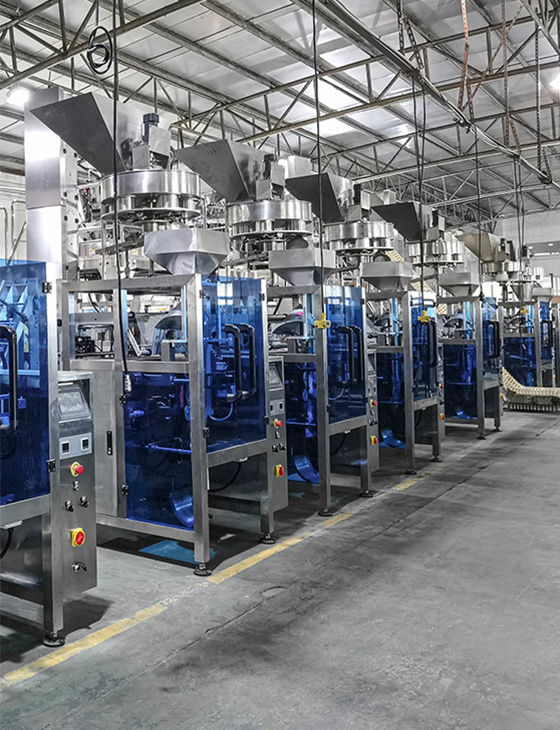
Select trial mixtures that represent meaningful differences in leaf size, volume and condition. Record the supplied material, bag, target quantity and configuration for each run. Watch startup, steady operation, replenishment and a planned pause. Summarize the acceptable finished output together with the interruptions and the agreed product and package findings. Do not turn the result into an unconditional rate for every salad.
Method, sources and applicability
This page reorganizes the published leafy salad packaging application and the linked equipment descriptions into a purchasing brief. The comparison is based on public configuration information, not our test of the alternatives. The observation tables are blank records to complete with the actual product; they contain no measured results. The questions below come from the purchasing issues already discussed on this application page, rather than a new search-question survey.
The vegetable configuration is a starting point for fresh-leaf review, not a transfer of frozen-product parameters. Sealing success is not a preservation claim. Fresh preparation, storage and distribution remain outside the machine trial, and environmental or cleaning ratings need explicit evidence for the proposed arrangement.
Technical Reading
- Vegetable VFFS configuration — Published configuration or planning guidance; reviewed 8 October 2026. review proposed surfaces and feeding arrangement.
- Fill weight and bulk density — Published configuration or planning guidance; reviewed 8 October 2026. compare loose leaf volume.
- Fragile-product handling — Published configuration or planning guidance; reviewed 8 October 2026. define visible leaf damage.
- Cleaning access review — Published configuration or planning guidance; reviewed 8 October 2026. document the fresh-product environment.
- Configuration review scope — Basis for the proposed-scope and missing-information response; reviewed 8 October 2026.
- Sample testing arrangements — Confirm availability, sample quantity, handling and costs before shipment; reviewed 8 October 2026.
Frequently asked questions
Can the same vegetable configuration handle salad leaves and frozen pieces?
Request separate assessments and identify any changed parts. Fresh leaves and frozen vegetables differ in the supplied condition, volume and handling objective. The broad catalog category does not transfer frozen-product results to fresh salad.
Will a larger bag solve leaf-filling problems?
It can change available package space but does not answer bridging or retention upstream. Review distribution, feeding, hoppers, collection and the bag entry with representative leaves, then repeat the relevant clearance observations.
Does an acceptable seal prove that the salad stays fresh?
No. The packaging trial records portioning, product condition and closure observations. Fresh-product preparation, packaging materials, storage and distribution need a separate coordinated assessment; a neat demonstration bag establishes no shelf-life period.
Explore the Equipment
Vertical Form Fill Seal
Vegetable & Salad Weighing Packaging
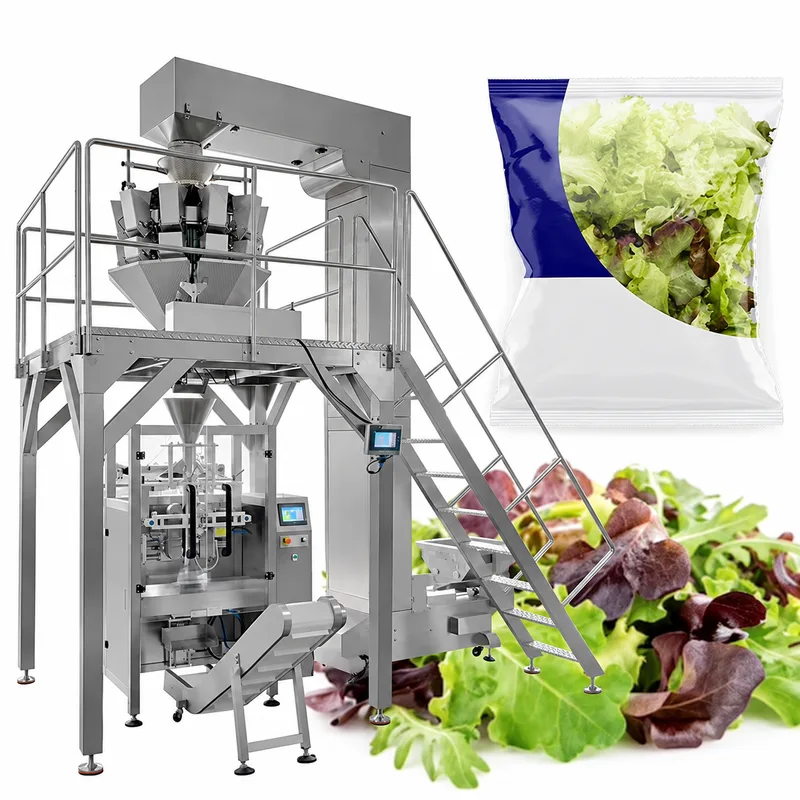
Fresh leaves and frozen vegetables need separate checks of hoppers, surfaces and cleaning; sharing an unproven setup can damage salad or hold up frosted pieces. Specify this weigher and VFFS line per product condition.
What to send us
| Item | Why we need it | Example format |
|---|---|---|
| Leaf type, cut and moisture | Define the fresh mixture reaching the feeder | Mix revision + labeled leaf photos |
| Bulk volume and filled appearance | Review hopper space and the retail objective | Consistent volume record + filled-bag photo |
| Release, damage and seal checks | Separate path retention from package defects | Stage sheet with observation and photo fields |
| Cleaning and operating environment | Review access and installation boundaries | Cleaning brief + room/layout note |
We reply within 24 hours.