
Packaging Machines / Vertical Form Fill Seal
Frozen Food Weighing & Packaging
Frosted pieces retained in a hopper can leave a bag underweight and turn up in later fills. Specify this frozen-food weigher and VFFS line from product temperature, frost, piece size and cleaning method.
- Published weigher options: 10, 14 or 20 heads, dimpled surface option
- Published speed: 25–70 bags/min, depending on product characteristics and weight
- Published bag range: length 100–350 mm, width 100–250 mm (customizable)
- Published power: 4.5 kW, 220 V / 380 V, 50 Hz / 60 Hz
We reply within 24 hours.
Published Configuration Data
| Weighing System | 10 / 14 / 20 Head Combination Multihead Weigher (Dimpled Surface Option) |
|---|---|
| Packaging Speed | 25 - 70 bags/min (Depending on product characteristics and weight) |
| Bag Size Range | Length: 100-350mm | Width: 100-250mm (Customizable) |
| Power Supply / Voltage | 220V/380V, 50Hz/60Hz, 4.5KW |
These values describe the listed configuration. Output depends on the product, fill quantity, bag and options. Confirm the final specification and trial conditions in your quotation.
Configuration & Selection
Choose the head count, hopper surfaces and chute from the most difficult-to-handle frozen product in your range, its frost condition and its largest piece. A correct displayed weight does not prove the whole portion reached the bag; retained pieces can leave one bag short and reach a later one. Share the product temperature, frost level and cleaning procedure so handling and electrical protection can be specified. Send details of your inlet temperature, frost and clustering description, largest piece size, target weights, bag drawing and cleaning method through the enquiry form or WhatsApp; physical samples are arranged separately.
On This Page
A bagging configuration for discrete frozen pieces
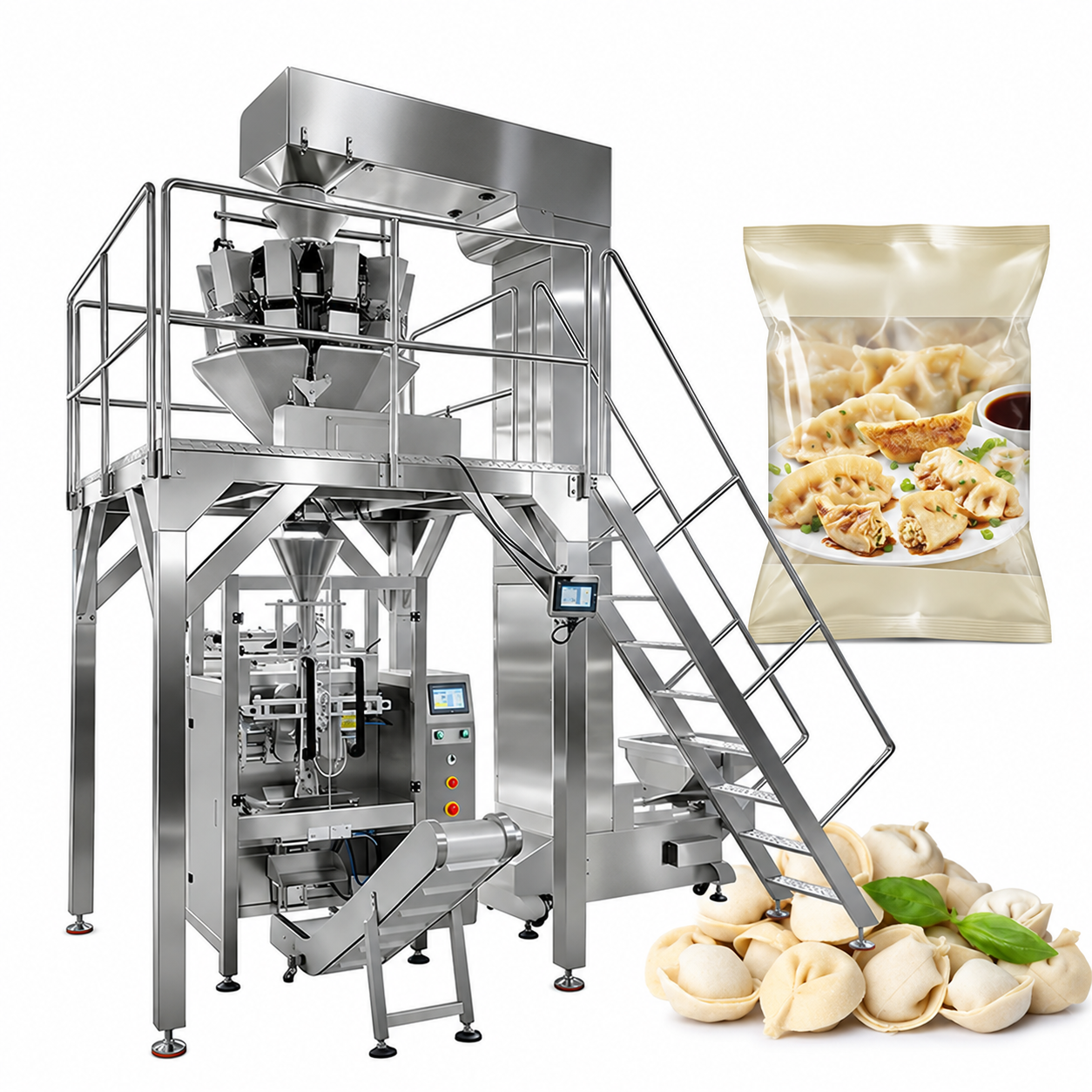
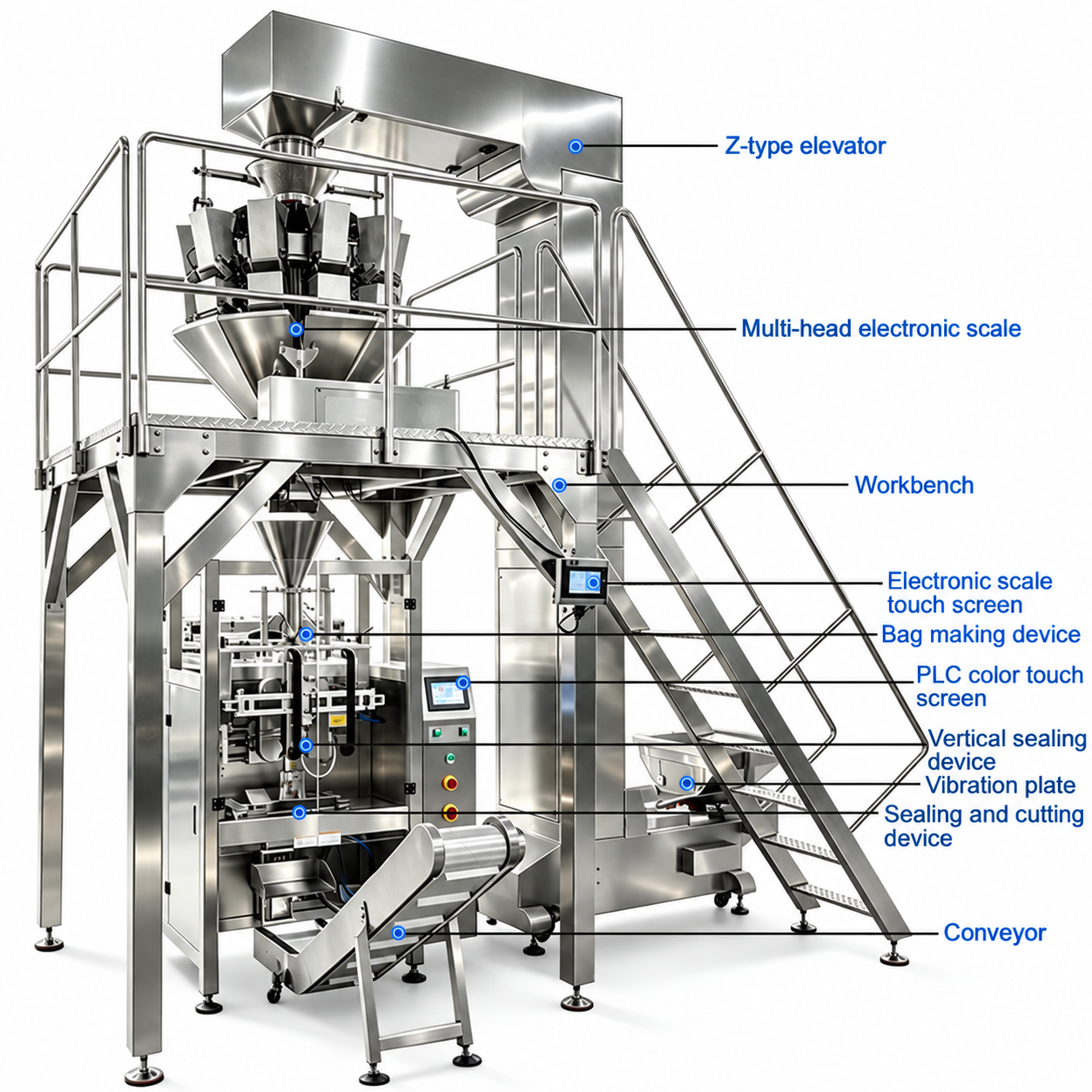
The frozen-food configuration combines product feeding, multihead weighing and vertical film-roll packaging for products such as dumplings, buns, rice cakes and meatballs. The source catalog describes an arrangement that can include an elevator, support platform and discharge conveyor. Selection is about matching those transfers and the weighing equipment to the actual frozen item, its surface condition and the filled bag you need. A product category does not make that match.
Start by saying how pieces arrive: separated, lightly frosted or joined in clusters. Give their temperature at the packaging inlet and how it changes during normal interruptions. Thin-wrapper dumplings behave differently from compact meatballs or soft-surfaced rice cakes. Identify the most demanding item in your planned range, and have the supplier show its movement through the complete proposed path, not just a short discharge into an open container.
Takeaway: Name the most demanding frozen item and have it run through the complete proposed path.
Following the product through the cold packing cell
Product moves from the supply point into the elevator or other selected feeder, across the weigher's distribution area and into individual hoppers. A selected combination of portions is then released into the filling tube and the bag below it. The timing has to let every piece clear before the closing jaws act. Large dumplings and irregular buns need particular attention where several hopper discharges meet in one chute.
Watch the product at each transfer and compare its condition before and after the line. Broken edges, torn wrappers and loose coating can reveal an impact or an obstruction that a final weight check will miss. In the trial, use the normal product supply arrangement. Hand-placed pieces prove little. The way a production container empties can change feed density and create clusters. Confirm where an operator can safely inspect this behavior. How is an accumulation spotted before it reaches the bagger?
Takeaway: Compare piece condition before and after the line, with production supply rather than hand-placed pieces.
Hopper surfaces, frost and incomplete discharge
The published configuration includes a dimpled contact-surface option. It gives the supplier a way to evaluate a different contact arrangement for damp or frosted products. It is not a universal cure for sticking. Product size, contact time, surface moisture and hopper geometry still matter. Compare the proposed surfaces using normal material. Check whether a hopper empties fully through consecutive cycles and after a pause.
Retained product causes two problems. The current bag may get less than intended. A later bag may get pieces from an earlier portion. Look for both patterns in the run record. The displayed weight does not prove that mass reached the bag. Find out how incomplete discharge is detected or handled in the proposed control sequence. Also discuss access for removing retained pieces and cleaning the contact area, including the spaces around gates and attachments that are hard to see in a routine demonstration.
Common mistake: Trusting the displayed weight while frosted pieces stay in a hopper and may drop into a later bag.
Takeaway: Check complete hopper discharge over consecutive cycles and after a pause.
Separating refrigeration duties from packaging duties
The bagging machine receives product in a defined condition. It does not replace the freezing or cold-chain process. Specify the ambient conditions around the equipment as well as the product temperature at the inlet. Moisture from the room, defrost cycles or cleaning can affect equipment surfaces and film handling, so the proposal should describe any measures chosen for the actual installation, including electrical enclosure suitability and provisions for condensation management.
The source material mentions protective construction. The final supplied components and their documentation have to set the cleaning and environmental limits. Stainless panels do not mean pressure washing is allowed. Give the supplier your cleaning procedure and ask which parts can be treated that way, which must be removed and which must be protected. Coordinate the restart procedure with the plant's own sanitation and temperature controls, so the first production run begins with equipment and product in the specified state.
Takeaway: Give the supplier your cleaning procedure and get written limits for each part.
Bag dimensions and the available filling space
The Published Configuration Data table lists a bag length range of 100 to 350 mm and a width range of 100 to 250 mm with customization, and 25 to 70 bags per minute depending on product characteristics and weight. These values describe a configuration range. They are not the result for every dumpling, bun or meatball. Large pieces need enough throat and bag space. A heavy portion may change the time needed to discharge and settle below the closing area.
Supply the normal and maximum piece dimensions along with the target bag weight. Include the intended laminate and a finished-bag reference if you have one. In the sample run, check the position of the uppermost piece before sealing and look for contact marks where sharp frozen edges press against the film. Evaluate bags after the intended handling and packing steps as well as at the outlet. A format that looks fine right after sealing may need a different allowance once pieces settle in a carton.
Takeaway: Size the bag and throat from your largest normal piece and check the top piece before sealing.
Weigher choices and mixed prepared foods
The Published Configuration Data table on this page lists 10, 14 and 20 head combination-weigher options. The quotation must state which head count and hopper arrangement is supplied for your product. More heads are never the only reason to pick a configuration. The size of useful portions, hopper volume, product release and integration with the bagger all decide whether an arrangement suits the job.
For bags with several ingredients, state whether you need only a total weight or a controlled amount of each component. A premixed supply can separate as pieces move through a feeder, especially when ingredients differ in size and density. Ask how the proposed system meets that requirement and how it will be tested. A standard combination weigher will not guarantee every mixed meal. If ingredient distribution is part of your product specification, inspect it in finished samples.
Takeaway: Choose the head count from portion size, hopper volume and release, not from the largest option.
- Supply normal frost, piece-size variation and clustered product for the trial.
- Confirm the quoted head count, hopper volume and complete-discharge checks.
- Match electrical protection and cleaning instructions to the actual cold-room procedure.
Changeover, cleaning and access requirements
A line running dumplings in the morning and meatballs later may need both a product change and a format change. List the contact parts that hold residues, the sections that need cleaning and the adjustments needed for the next product. Cover the feeder above the weigher and the chute below it. The hopper bowls are only part of it. Request a demonstration of removal and refitting, using the access available in the proposed layout.
For bag changes, verify the former, film width, length setting and product clearance before releasing production. First-run checks should cover weight, seal condition, piece damage and readable coding. If metal detection or checkweighing is specified, show how rejected bags are separated from accepted output. The arrangement should let operators inspect product flow, change film and clean safely, with no inaccessible gap between pieces of equipment. Document the utilities and clearance requirements for the whole cell, including the support platform and outlet conveyor.
Takeaway: Demonstrate part removal and refitting in the proposed layout before accepting the cell.
A trial that represents the production day
Prepare normal frozen product with its typical frost and size variation. Include representative clusters. Hand-separated perfect pieces prove little. Describe the expected input temperature, target weights, bag construction you want and the longest time product is normally held before packing. Agree which observations will be recorded during replenishment, a pause and a restart, because the difficult behavior may only show once the line has run for a while.
The acceptance record should connect filled weight with actual discharge, product integrity, film condition and seals. Label samples with the product, film and operating setup so later inspection can be traced back to the run. The quotation should name the weighing arrangement, contact-surface options, feeder, platform, bagger and downstream equipment. Confirm the final environmental and cleaning documentation separately from the catalog narrative. Those details turn a general description into a configuration you can assess against your real process.
When this does not apply
The published speed, bag and head-count ranges describe the configuration, not every dumpling, bun or meatball. The line does not freeze product or control the cold chain. A correct total bag weight does not establish the amount of each ingredient; confirm how any required proportions will be controlled and checked. Cleaning and environmental limits come from the documentation of the supplied components, not from this page.
Takeaway: Confirm head count, cleaning limits and ingredient control for your product in the quotation.
Frequently asked questions
Is a weigher with more heads always better for frozen food?
No. The size of useful portions, hopper volume, how product releases and integration with the bagger decide the arrangement. The published options are 10, 14 and 20 heads; the quotation should say which one suits your product and why.
Why can a bag be short when the weigher showed the correct weight?
Because the displayed weight does not prove the mass reached the bag. Frosted or damp pieces can stay in a hopper or chute. Check complete discharge in the trial and compare finished bag weights with what you saw leave the hoppers.
Can I keep my existing cleaning method?
Only for parts the supplier confirms can take it. Stainless panels do not mean pressure washing is allowed; send your procedure and ask which parts can be washed, which must be removed and which must be protected.
Does the packing machine freeze or chill the product?
No. The bagging machine receives product in a defined condition and does not replace freezing or the cold chain. Specify the inlet temperature and the room conditions around the equipment.
Planning Guides for This Configuration
These pages cover the system type, trial preparation and project checks that apply to this configuration.
Request a Packaging Configuration
We reply within 24 hours. Tell us what you need to pack. Leave quantity and output blank if you are still deciding. When you continue, WhatsApp opens with your enquiry written out so you can review it and send it to our team.
Explore the application · Configuration and project support
Related Packaging Configurations
Vertical Form Fill Seal
Vegetable & Salad Weighing Packaging
Fresh leaves and frozen vegetables need separate checks of hoppers, surfaces and cleaning; sharing an unproven setup can damage salad or hold up frosted pieces. Specify this weigher and VFFS line per product condition.
What to send us
| Item | Why we need it | Example format |
|---|---|---|
| Product description at the inlet | Temperature, frost and clustering decide surfaces and feeding. | Inlet temperature in °C and photos of normal and clustered product. |
| Largest normal piece size | Sets throat, chute and bag space. | Length, width and height in mm for the largest normal piece. |
| Target weights and bag drawing | Sets dose, bag size and the expected speed range. | Net weights in g and a dimensioned bag drawing or retained bag. |
| Cleaning procedure | Decides enclosure protection and which parts must be removable. | Your written cleaning method, including water use and chemicals. |
| Room conditions | Moisture and temperature around the line affect surfaces and film. | Room temperature and humidity range, defrost and washdown schedule. |
We reply within 24 hours.