
Milk Creamer Stick Packs
Using single-stick artwork as a four-lane film layout risks reprinting. Review the complete web, creamer formula, dose and each lane before ordering film.
| Input or item | Typical value or source | Why it matters |
|---|---|---|
| Formula | Buyer sample and recipe ID | Select the product-contact review |
| Dose and density | Buyer quantity and measurement method | Check occupied volume and auger tooling |
| Finished stick | Buyer drawing; dimensions to confirm | Define seals, opening and usable space |
| Production web | Four-lane layout for the proposed configuration | Approve strip boundaries and print repeat |
| Lane checks | Separate fill and seal records | Find differences hidden by an overall average |
Use the published configuration and related checks
Use these references to connect the review inputs with the published equipment scope and the next decision.
On This Page
Use a four-lane film sample to approve creamer artwork
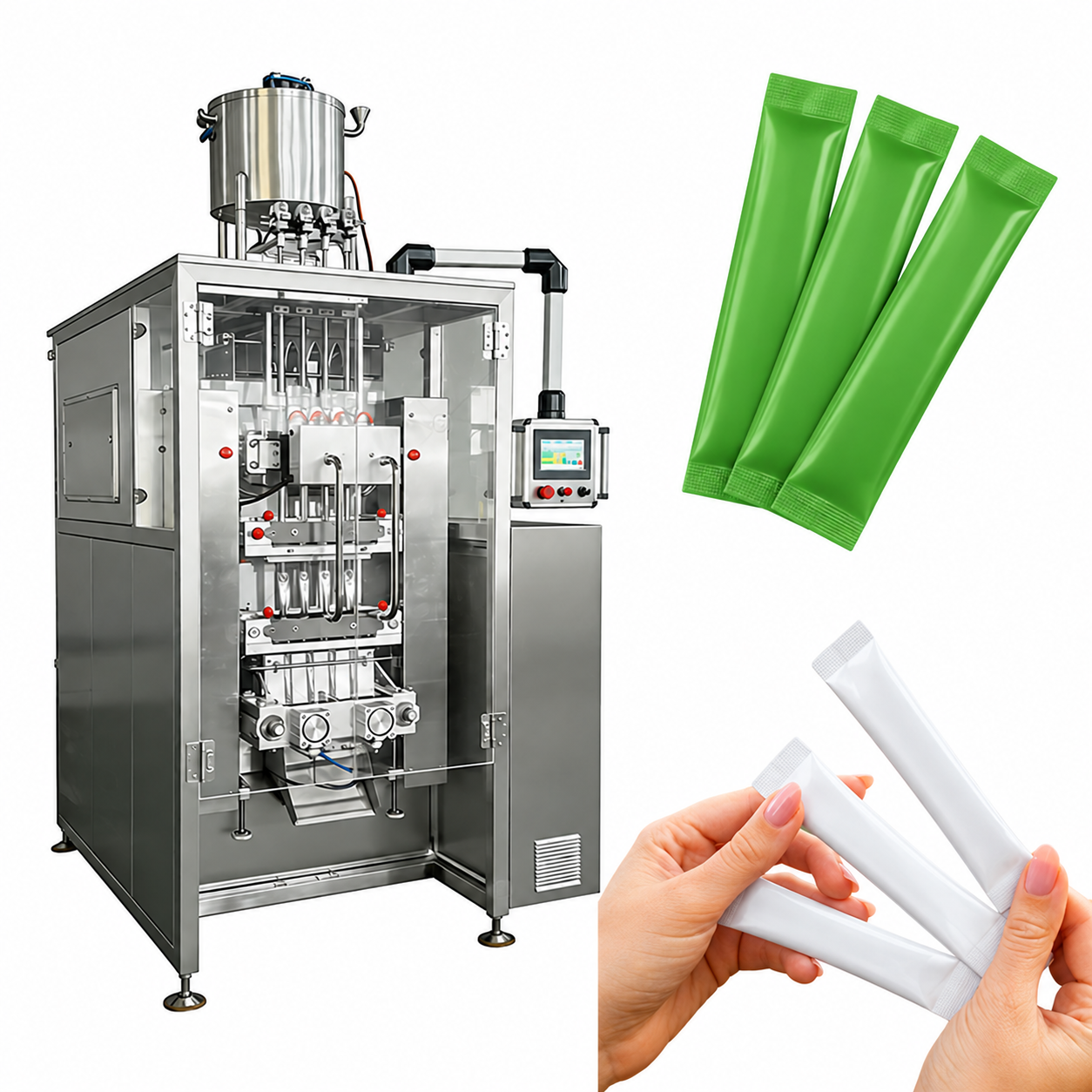
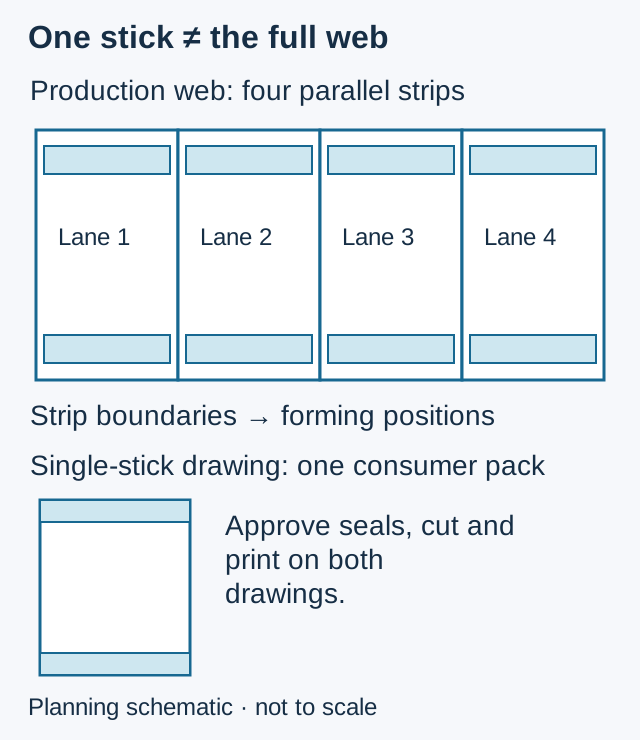
The creamer stick configuration feeds a wide film roll, slits it into four strips, forms them into parallel sticks and meters powder through separate auger positions. So approving one stick design is not the same as approving the production web. The single-stick artwork shows what the consumer sees. The web drawing shows how that design repeats across the machine's film supply.
The converter and the equipment supplier should review one shared drawing that shows the lane arrangement, longitudinal seal areas, cross-seal positions and cut boundaries. Place the product name and other required information inside the usable panels. Confirm where a code will appear if coding is part of the project. An earlier single-lane artwork file cannot simply go to the printer for the new roll.
During the packaging demonstration, keep one set of finished sticks from all four lanes and lay them side by side. Check text placement, opening position and the visible back seal along with the powder portion. Purchasing then has a concrete reference for repeat film orders, and it becomes easier to tell an artwork-layout issue from a dosing adjustment.
Identify the powder rather than relying on its label
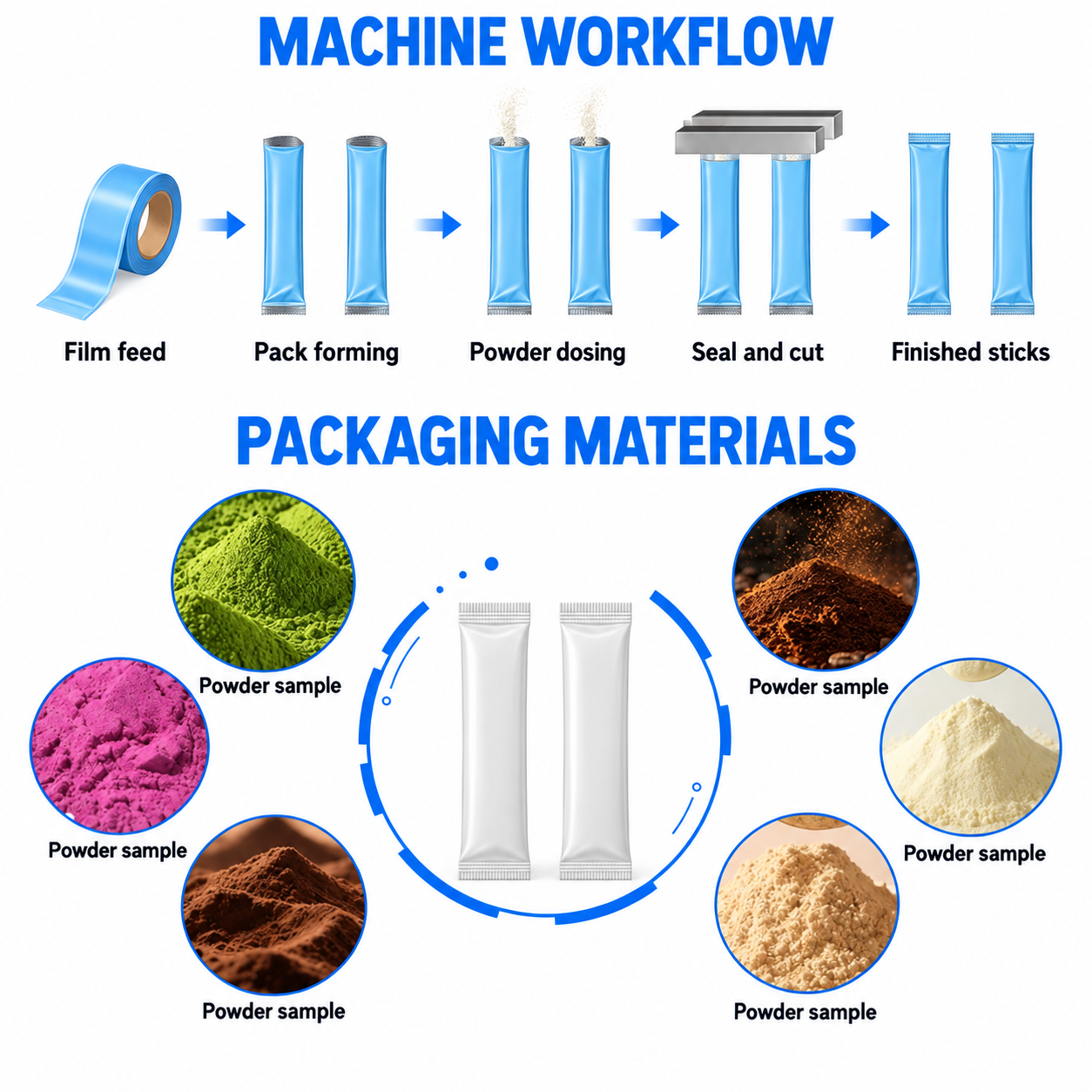
In an equipment enquiry, describe milk powder, creamer and blended coffee whiteners as individual formulations. Commercial names say nothing certain about density, flow or contact behavior. Supply the actual material and explain its condition at the packing point, together with the intended dose range and the normal variation seen in handling. A convenient substitute powder can show how the machine moves, but it cannot confirm performance on the product you are buying for.
The catalog's four-lane creamer stick configuration combines powder dosing with vertical stick forming and sealing. It is a starting architecture for portion packaging. Find out which formulation samples support the proposed tooling and which products remain untested. Not every powder sold for coffee will share the same filling setup, package volume or product-contact requirements.
Match the portion with the intended service setting
A creamer stick may end up in hospitality, office service or retail multipacks. Explain the intended use and provide an example of the finished portion you want. The consumer opening, printed identification and ease of emptying deserve review along with the target quantity. A package that looks right in a flat artwork file still has to be examined once it is filled and sealed.
Prepare a drawing with usable dimensions, seal margins, print repeat and the cut or tear location. Review the powder volume with the equipment supplier before ordering production film. If more than one formulation uses the same design, assess each material, because equal mass does not mean equal occupied space. Keep the formula and film revision together, so later questions about package fullness or closure clearance can be traced to the right trial.
Inspect the dosing outlet and powder buildup
The supplier should name the auger and product-contact components proposed for the dose range. Watch how powder leaves the outlet and enters the stick, including what happens at the end of the fill. Note any retention or buildup near the sealing area. A particular drive system does not by itself prove a clean closure zone with every creamer formula.
If a powder-management or extraction feature is proposed, confirm its scope and test it in the intended configuration. A general statement that dust has been eliminated means little until you have seen a representative run. Specific notes on lane, location and run stage help the team investigate a problem. They also let a later modification be checked against the same conditions, instead of changing several variables and losing the basis for comparison.
Review all four lanes as separate observations
Agree a method for identifying samples from each lane, and keep that information through inspection. Record portion results separately from sealing cleanliness, print position and cut alignment. An average across all sticks can hide a recurring problem at one outlet or forming position. Look at how the equipment supports adjustment and repeat setup for your product and film.
Include startup, stable running and powder replenishment in the sample plan. Note any change in material condition and any operator intervention. Keep consecutive sticks, not just the best-looking ones. The record should describe what each lane produced under the stated conditions. A short demonstration is not a promise that every future milk or creamer formulation will perform the same without further review.
| Lane | Fill record | Package record |
|---|---|---|
| Lane A | Sample ID / net quantity: TBD | Seal cleanliness / print / cut: TBD |
| Lane B | Sample ID / net quantity: TBD | Seal cleanliness / print / cut: TBD |
| Lane C | Sample ID / net quantity: TBD | Seal cleanliness / print / cut: TBD |
| Lane D | Sample ID / net quantity: TBD | Seal cleanliness / print / cut: TBD |
Plan product-contact changes for the real formula range
List the products in their expected production sequence and describe the cleaning method the factory requires. Find out which parts can be reached for inspection and which are removed or changed under the supplied procedures. You also need to know how different dosing sets are labeled and stored when several formulas use different parts. These operational details bear on the purchase even when the external stick dimensions stay the same.
The equipment demonstration does not replace the operator's cleaning validation or product-control responsibilities. What it shows is the proposed hardware, access and documented change activities. If the supplier records a changeover time, insist on a clear start and end point and a description of the work included. A film replacement and a complete formula change are not the same operation, so do not compare them as if they were.
Consider collection and secondary packaging
Think about what happens after the sticks leave the machine. If the project includes counting into bags, arranging portions for cartons or another collection method, state that requirement explicitly. Ask which equipment and interfaces are included and which belong to a separate project. The stick-forming unit's output is only one element of a complete portion-pack workflow.
Review acceptable finished output over the agreed trial period, including interruptions and rejected sticks. Record the formulation, dose, material and active options with the result. That compares far better than a nominal maximum speed detached from its conditions. If downstream handling is unavailable for the first demonstration, name the limitation and agree how the interface will be confirmed. The quotation should keep that boundary and not imply a fully tested integrated line.
Settle the questions that affect the purchase
Send representative powders, target quantities, film samples, drawings and a production schedule with the enquiry, plus the factory layout and the space for powder supply, film loading and completed-stick collection. The offer should list tested combinations and open questions. That supports a practical selection based on the intended creamer business and avoids unsupported claims about every powder or packaging material that might be used later.
Before sending powders, agree receiving arrangements, sample quantities and any costs with the team. Put the intended service setting on the brief: loose portions for hospitality and sticks collected into retail packs can create different discharge questions. Ask the configuration review to identify a suggested equipment scope and missing information, with each unresolved item attached to the formula and film concerned.
Method and sources
This revision reorganizes the existing milk creamer stick packs guidance and the linked published configuration descriptions, reviewed on 8 October 2026. The blank records and diagrams are planning aids, not customer results or independently verified equipment tests. Questions below come from the existing page’s buying questions and the 8 October editorial review, not a claimed survey or search-frequency dataset. Confirm sample arrangements, quantities and costs before sending material.
Frequently asked questions
Can one creamer configuration pack milk powder and a beverage blend?
Assess each formulation and identify common or additional dosing parts. A successful run with one powder is not approval for the others.
Can software alone change the stick size?
Request the format-part list and confirmed dimensional range. A screen recipe does not establish which physical changes are needed.
Does a filling trial establish shelf life?
No. The finished product and package need their own assessment; the equipment trial addresses the recorded filling and sealing conditions.
Should samples from all four lanes be mixed together?
Keep lane identities through weighing and package inspection. A combined average can hide a recurring outlet or forming-position problem.
What if two creamer formulas use the same printed stick?
Keep separate formula and density records. Equal target mass and identical artwork do not establish equal occupied volume or common dosing tooling.
Does the stick machine include counting and cartoning?
Only the agreed quotation defines that boundary. State the collection and secondary-packaging work you need and request the included interfaces.
Explore the Equipment
Multi-Lane Stick Packs
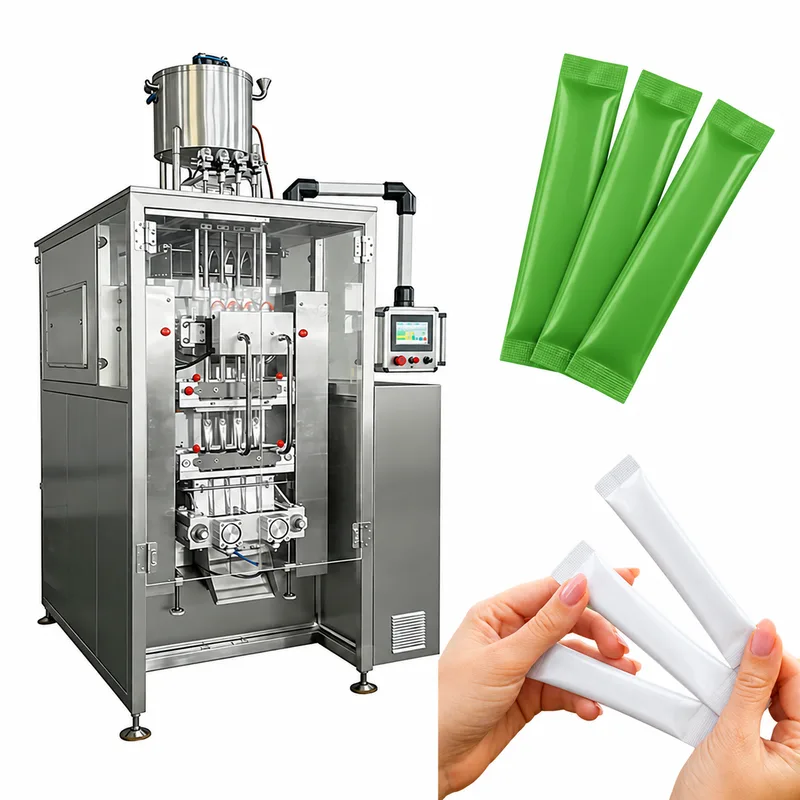
Four-Lane Creamer Stick-Pack Machine
Creamer that cakes in the hopper or dusts the seal can cause runs of rejected sticks. Specify this four-lane creamer stick-pack line from your formula, serving, moisture sensitivity and changeover order.
What to send us
| Item | Why we need it | Example format |
|---|---|---|
| Formula samples and intended dose quantities | Identify each powder and portion for dosing review. | Formula-A / lot-TBD / dose-TBD; sample photo |
| Film, tear feature and finished-stick dimensions | Review web arrangement, seals and opening together. | Stick drawing rev-TBD + full-web PDF |
| Cleaning method and formula-change schedule | Define access and work between recipes. | Recipe sequence + cleaning procedure reference |
| Per-lane fill results and seal inspection plan | Keep fill variation separate from package defects. | Lane-A–D / run-stage / sample-ID worksheet |
We reply within 24 hours.