
Collagen Powder Stick Packs
A dose can crowd the stick or hide a lane difference. Review collagen formula, density, usable pack space and per-lane samples before choosing cut styles.
| Input or route | Material / evidence to provide | Decision to review |
|---|---|---|
| Formula and density | Actual plain or flavored formulation | Relate powder behavior to dosing and volume |
| Dose | Intended range by formula revision | Select the proposed auger tooling for review |
| Usable stick space | Dimensioned film drawing and filled sample | Allow for outlet, seals and opening |
| Per-lane sampling | Four-lane configuration; labeled run samples | Keep quantity, dust and alignment findings separate |
Choose the configuration from the product and package
Start from the published four-lane auger route, using the actual formula and dose. Resolve filling space and lane sampling before cut styles, and keep the stick machine boundary separate from counting or cartoning.
On This Page
Specify the collagen formulation rather than the category
A collagen powder project starts by naming the exact material to be packed. Plain powder and a flavored blend can differ in density, flow and the space the same nominal mass needs. Provide representative formulation samples and describe their condition at the filling point. Include the variation you see in storage or replenishment, so the equipment review does not rest on an unusually easy sample.
For this application the catalog offers a four-lane stick-pack configuration with auger dosing. It is one possible architecture, and the tooling does not fit every supplement formula. Tell the supplier the dose range you intend and the blends you expect to run on the machine. A formulation still in development keeps a provisional compatibility status. Base the final configuration on known material and package requirements rather than on the broad label "collagen".
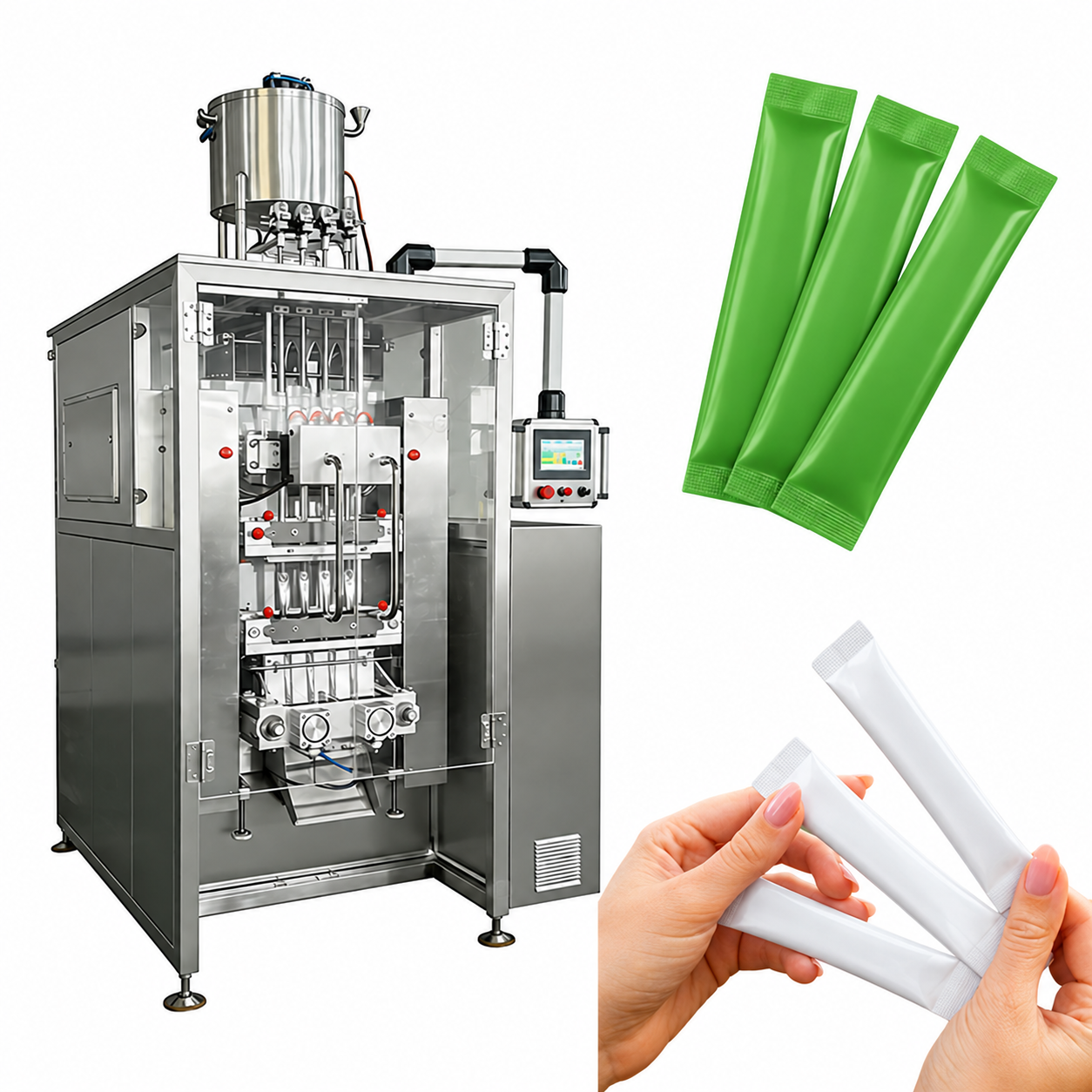
Link the serving quantity to physical pack space
The product team may set a serving quantity before the packaging team picks a stick. Bring the two decisions together early by supplying the dose, any density information and a proposed package drawing. The supplier needs to say how the material will fill the usable stick volume and how much room the filling and closing sequence takes. An outside dimension does not tell you how much space is left for powder.
Include the opening feature, seal margins, coding position and print repeat. Review a real filled sample before you approve production artwork. Suppose a reformulation changes the bulk characteristics. The package may need another assessment even if the declared serving mass stays the same. Keep the formulation and film revisions together in the project record. Then any later question about fit or appearance can be traced to the material and package that were actually evaluated.
Confirm the proposed auger and contact components
Find out which screw and product-contact parts are proposed for your formula and dose range. If several blends are included, get a list of common components, change parts and required adjustments. That list shows the configuration on offer and what has been demonstrated to work. Choosing hardware from a generic powder description, with no testing, is a gamble.
Watch the whole powder path, including supply, hopper, auger outlet and the space before sealing. Note retained material, uneven release or dust near the package closure wherever you see it. Any powder-management feature needs a defined scope. An independent servo or an extraction option will not remove every filling problem. You need a representative run to link those features to a visible result on your own collagen formulation.
Keep each lane identifiable in the trial record
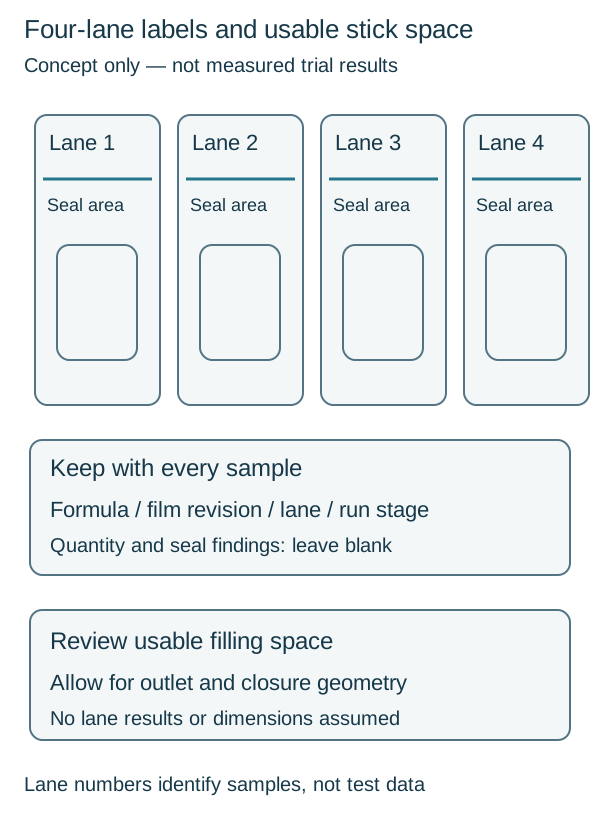
A four-lane stick configuration needs observations at every lane. Agree how collected packs will be labeled so their origin stays visible during fill and package review. An overall average from a mixed container of sticks can hide a persistent difference at one position. The supplier should explain how the setup allows lane-specific adjustment and how the settings you establish are kept in the operating documentation.
Cover startup, powder replenishment and an agreed pause as well as stable running. Keep samples from each event and note every intervention. Judge portion quantity, sealing-area cleanliness and printed presentation as separate categories. These records describe only the tested material and configuration. They say nothing about nutritional composition, health effects or dose performance for other formulas. Those topics need their own evidence, outside the equipment demonstration.
| Lane label | Material and stage | Fill / seal observation |
|---|---|---|
| Lane 1 | Formula: ___ / film: ___ / stage: ___ | Quantity: ___ / seal area: ___ / sample: ___ |
| Lane 2 | Formula: ___ / film: ___ / stage: ___ | Quantity: ___ / seal area: ___ / sample: ___ |
| Lane 3 | Formula: ___ / film: ___ / stage: ___ | Quantity: ___ / seal area: ___ / sample: ___ |
| Lane 4 | Formula: ___ / film: ___ / stage: ___ | Quantity: ___ / seal area: ___ / sample: ___ |
- Actual formula, density information and dose range
- Stick dimensions and film specification
- Per-lane fill and seal-area sampling
Define the stick shape separately from the collagen portion
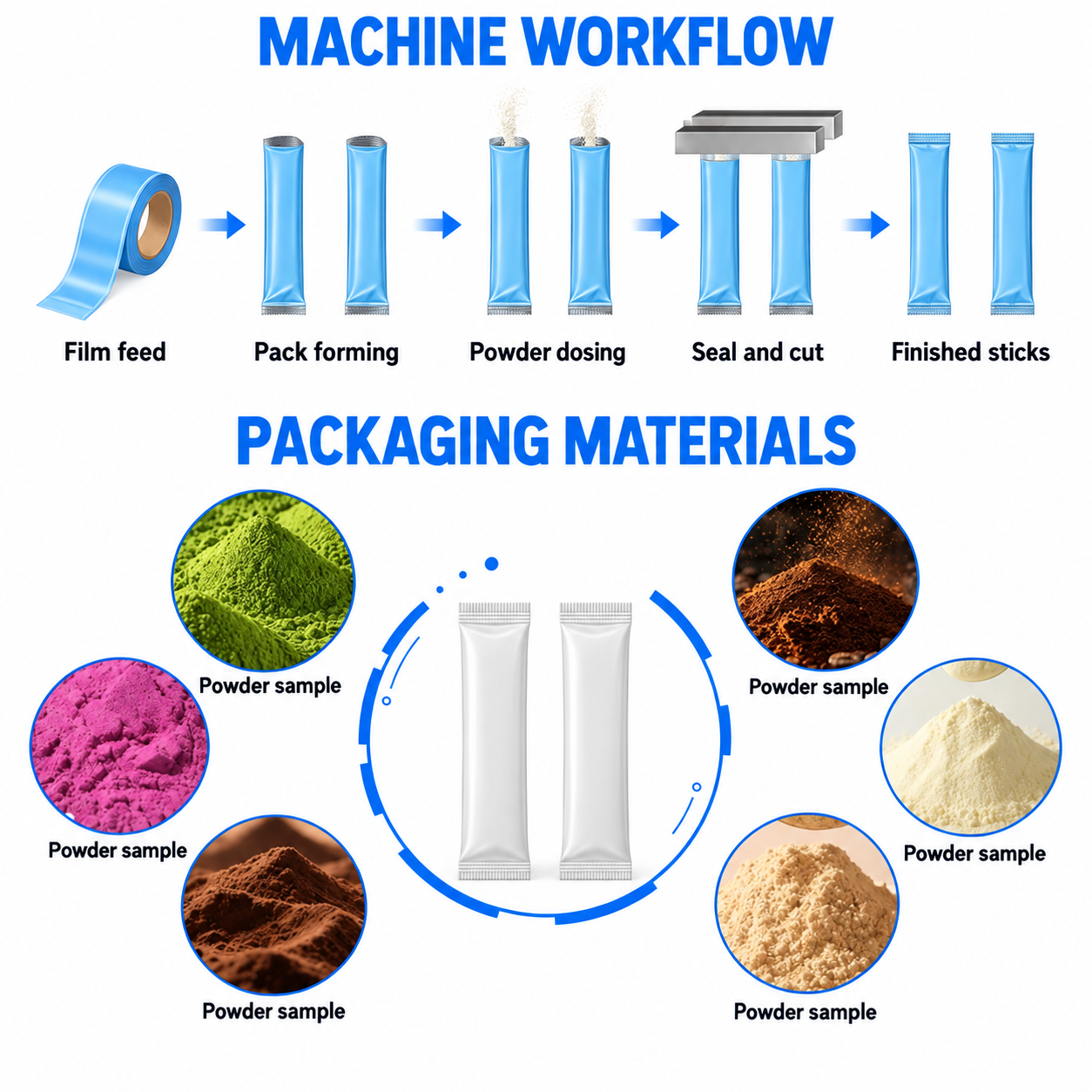
The collagen configuration pairs parallel auger dosing with vertical stick forming. It offers different cut and opening treatments for the finished pack. Straight ends, shaped corners and an opening notch are packaging choices tied to the actual tooling. They are not interchangeable artwork details. A supplement brand can keep the same serving quantity and still ask for a different outline. That change needs its own format review.
Prepare a physical or dimensioned reference that shows the sealed edges, opening location and overall silhouette you want. The supplier should tell you which forming and cutting components are included for that reference and which alternatives need extra parts. Let the powder team assess the portion, and the film and equipment teams assess the shape. Then bring the two together in a filled sample.
If a carton will hold several sticks, check the accepted outline inside the intended carton or insert; that links the stick geometry to the product presentation. It does not assume any counting or cartoning equipment is included. The quotation should name the supplied stick format and list other shapes as separate options, each with its own confirmation status.
Evaluate the opening and use of the finished stick
The consumer has to be able to open the stick and empty the portion as intended. Provide the cut or tear feature you want and examine real samples from the proposed configuration. Check where it sits relative to printing and sealing, and compare sticks from different lanes. If you want a special cut or a connected-strip presentation, get it confirmed as included. The base machine does not necessarily come with every option.
Have the packaging team review the material construction and the intended product use together. The equipment trial can show the format produced and how the filling behaves. It is not proof of product stability. Tie any storage or package-performance assessment to the actual formulation, film and closure. If those change later, identify which checks need another look, and do not carry every conclusion forward automatically.
Plan cleaning and formula changes before purchase
Describe the products that will follow one another on the line and the cleaning method your operation requires. Get access information for the hopper, screw and filling path, including how different tooling is identified and stored. A printed-film change and a product-contact change are different jobs. Talk about them separately in a changeover discussion, and do not let them share one unexplained timing claim.
If a demonstration includes a formula change, record the parts handled, the adjustments made and the observations used to accept the next sticks. Your factory stays responsible for its own cleaning and product-control procedures. The purchase review should show whether the proposed hardware and access support them. If the supplier has not seen a planned blend, say so plainly and agree what information or extra trial is needed before it is confirmed.
Compare configurations using the whole serving-pack workflow
Say whether the project ends at individual sticks or connects to counting, collection or secondary packaging, and confirm which interfaces and equipment the quote includes. Record acceptable finished sticks over an observed run, along with interruptions and rejected packages. A nominal lane count or cycle figure does not decide the output of the whole commercial workflow.
Method, sources and applicability
This page reorganizes the published collagen powder stick packs application and the linked equipment descriptions into a purchasing brief. The comparison is based on public configuration information, not our test of the alternatives. The observation tables are blank records to complete with the actual product; they contain no measured results. The questions below come from the purchasing issues already discussed on this application page, rather than a new search-question survey.
The published four-lane auger configuration is not confirmation for an untested supplement blend. Record tested and pending formulas separately. Equipment observations support filling and package review, not nutritional, health or preservation claims; secondary packaging remains a separately defined interface.
Technical Reading
- Four-lane collagen configuration — Published configuration or planning guidance; reviewed 8 October 2026. check auger and cut-style scope.
- Auger stick-pack systems — Published configuration or planning guidance; reviewed 8 October 2026. review the dosing route.
- Powder dosing trials — Published configuration or planning guidance; reviewed 8 October 2026. label each lane and replenishment stage.
- Fill weight and bulk density — Published configuration or planning guidance; reviewed 8 October 2026. compare serving mass with pack space.
- Configuration review scope — Basis for the proposed-scope and missing-information response; reviewed 8 October 2026.
- Sample testing arrangements — Confirm availability, sample quantity, handling and costs before shipment; reviewed 8 October 2026.
Frequently asked questions
Can the same machine pack a future flavored collagen blend?
Keep that formula provisional until material and tooling are reviewed. Plain collagen and a blend can differ in density and release. Identify shared components, change parts and the sample evidence needed for the new formulation.
Does a smaller dose necessarily allow a narrower stick?
No. Assess occupied volume, auger outlet and sealing clearance together, using the actual formula and film. A smaller declared mass alone does not establish the usable geometry or consumer opening.
Is counting and cartoning included with the collagen stick machine?
Only the quoted scope can establish that. Supply the intended carton or insert and describe the collection and counting interface. The published stick configuration and its cut options do not imply a complete secondary-packaging line.
Explore the Equipment
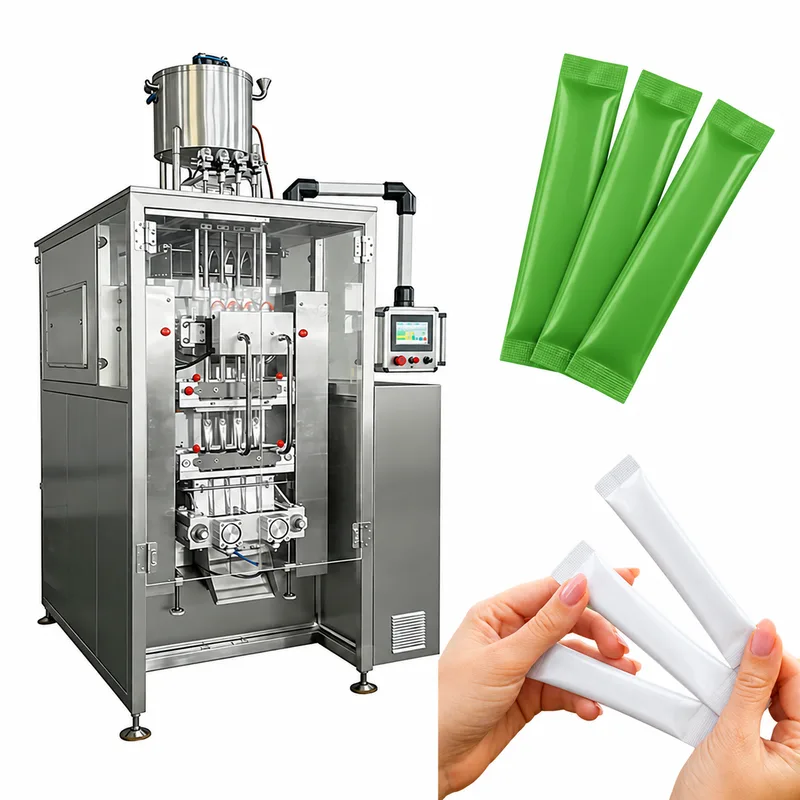
Multi-Lane Stick Packs
Four-Lane Collagen Stick-Pack Machine
Four lanes can hide one lane that under-doses. Specify this four-lane collagen stick-pack machine from your powder density, serving weight and stick size, and sample every lane.
What to send us
| Item | Why we need it | Example format |
|---|---|---|
| Formula, density and dose | Review material and tooling selection | Formula revision + dose/density sheet |
| Stick and film | Check net filling space and opening | Dimensioned film PDF + revision label |
| Per-lane fill and seal observations | Keep differences traceable | Labels: formula / lane / stage / film revision |
| Cleaning and changeover | Identify access and parts questions | Product sequence + cleaning-method brief |
We reply within 24 hours.