
Coffee Bean Packaging
Coffee bean packaging in valve pillow bags, quad-seal bags or doypacks. Compare bag presentation, weighing conditions and valve or gas options.
Read a quad-seal coffee bag as a forming project
A quad-seal coffee pack is more than a pillow bag with a different printed design. The catalog configuration includes dedicated treatment of the four vertical edges, alongside the normal film drawing, filling and closing operations. The folded side areas and reinforced edges help define its finished outline. If this is the chosen retail appearance, the enquiry should explicitly identify quad-seal forming and include the complete bag drawing rather than only its front-panel width.
Lay the intended artwork flat and mark the front, back, side panels, vertical edge seals and top closure. If a valve is included, mark its position on the same drawing. Ask the equipment team and film supplier to review that layout together so the printed information lands on the intended faces of the filled bag.
During sample review, stand several filled bags next to each other and inspect their shape from the front and sides. Also place them into the planned carton orientation. This provides a practical check of the proposed format's presentation and fit; it does not replace package performance testing. Retain the accepted sample as the visual reference for subsequent film orders.
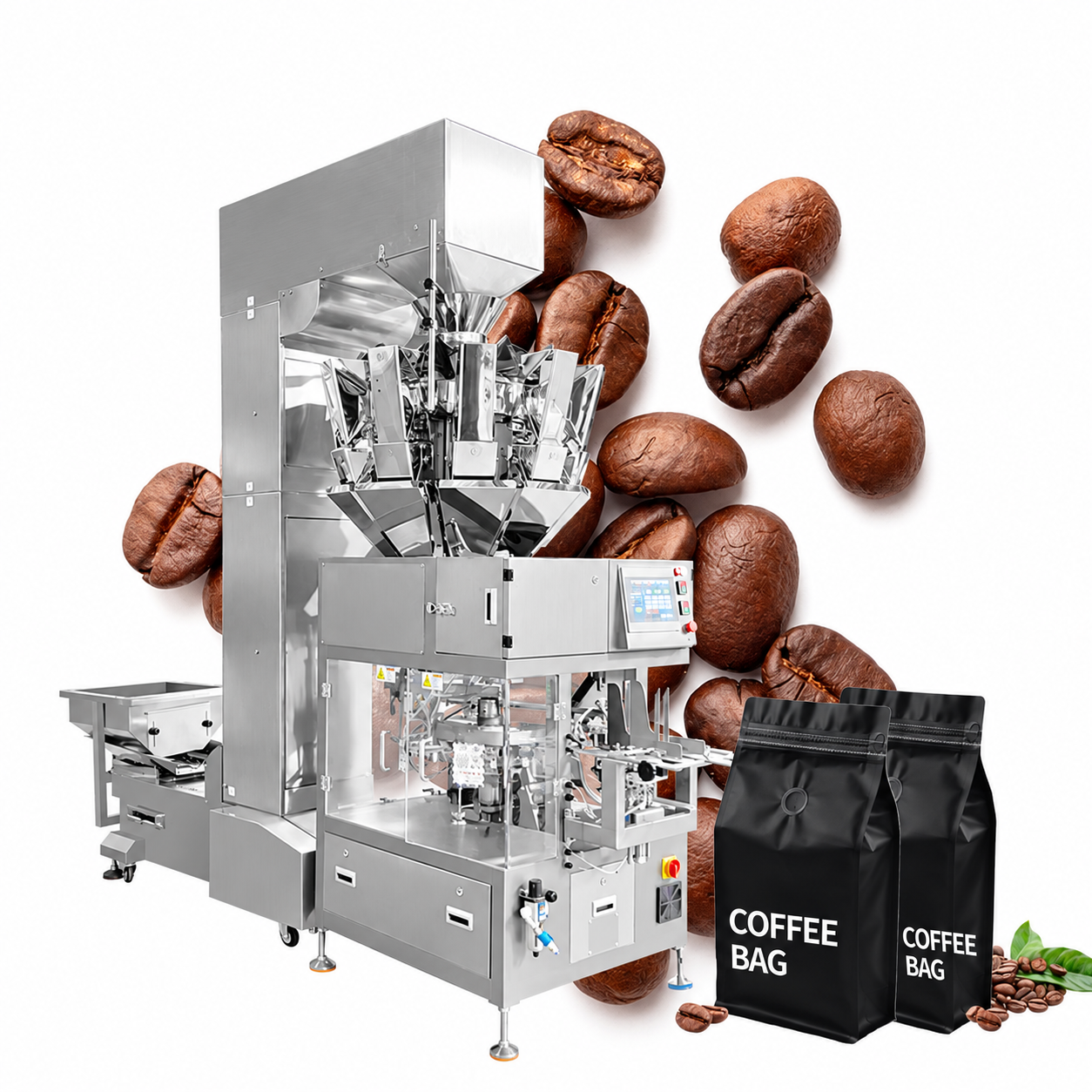
Choose the retail pack first
Whole beans can be presented in valve-pouch VFFS bags, structured quad-seal bags or premade doypacks within the catalog range. Compare the actual bag samples and desired shelf presentation. A preferred appearance should be translated into dimensions, film or pouch construction and explicit options before selecting the complete machine configuration.
Review bean handling
Provide beans in their intended packing condition and describe the range of bean size and surface oil. Ask how feeding and transfer will be assessed for the selected weigher. Define what product damage matters to you and how it will be recorded, instead of relying only on an empty-machine speed demonstration.
Make optional functions visible
Show the valve specification and location if required, and state whether gas flushing is requested. Ask the quotation to separate those functions from weighing and bag forming. The final output should be evaluated with the requested options running. Record the film, beans and configuration together so the result is not generalized to every coffee pack.
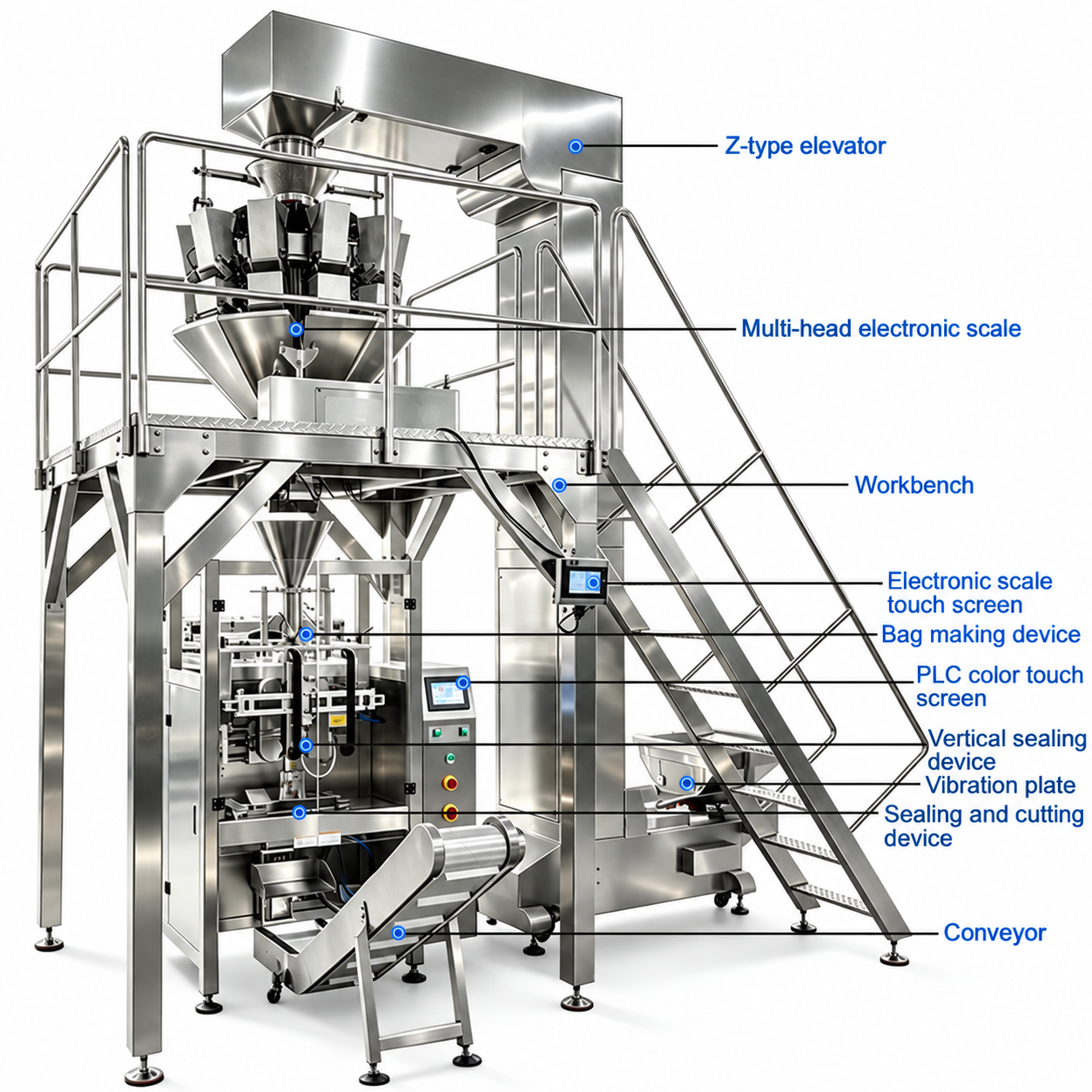
Use roast and bean condition to frame the trial
Whole-bean equipment selection needs a description of the beans at the point where they are packed. Provide representative batches, including normal size variation, visible oil and the proportion of broken pieces entering the line. Explain the sequence between roasting, storage and packaging without asking the equipment supplier to infer it from a retail label. Keep sample handling consistent so observations from different trials can be compared.
Review product movement before discussing a promised line rate. Beans pass through supply equipment, feeder surfaces, weighing hoppers and a discharge path. Identify the visible damage that matters to the business and inspect incoming samples for the same defects. This baseline separates changes introduced by the proposed handling route from characteristics already present in the supplied beans. A displayed target weight is useful, but it is only one part of the evaluation.
Convert shelf presentation into a bag specification
A valve-pouch VFFS bag, quad-seal coffee bag and premade doypack can give different retail presentations. Send an actual filled pack and a dimensioned drawing so the supplier understands which appearance matters. Include side folds, bottom shape, sealing margins and the position of the opening feature. Ask which structural details are created by the machine and which arrive in the supplied pouch or film.
Do not finalize the choice solely from an empty bag photograph. The beans occupy space differently from the flat mockup, and the top area still needs enough room for reliable filling and closure. Examine the filled sample standing, handled and prepared for the intended secondary package. These observations do not establish transport performance by themselves, but they help identify the packaging questions that should be assessed before a bag format becomes a fixed purchasing requirement.
Review the valve as a specific component
Provide the valve specification and the desired position relative to artwork, folds and the fill level. Establish whether the valve is supplied already fitted to a premade pouch or applied within the proposed film-roll sequence. Those choices create different equipment and material responsibilities. The quotation should state which route is included and which party provides the component.
During the trial, inspect the placement and attachment as part of the finished-pack review. Record the actual valve, film and coffee condition used. If the brand later changes the valve or relocates it for a new design, arrange a compatibility review rather than assuming the previous approval covers the change. Ask how the line identifies an interrupted valve operation and how affected packages are handled in the proposed workflow. Confirm any detection function explicitly instead of assuming it accompanies every valve option.
Assess recipe changes with real production priorities
A roaster may run several bean origins in the same bag size while also changing between hospitality and retail quantities. Separate a product change from a bag-format change when describing the schedule. Ask which settings, contact checks and format components apply to each activity. Confirm the method used to identify the correct parts and restore an established recipe.
For a hypothetical business with frequent short batches, the practical comparison may favor a configuration that is easier to prepare repeatedly even if another arrangement shows a higher short demonstration rate. Record changeover activities and the first acceptable packages of the next run. State where any timing observation begins and ends. This gives the buyer a meaningful basis for scheduling without converting a catalog's general flexibility claim into an untested promise about every roast and bag combination.
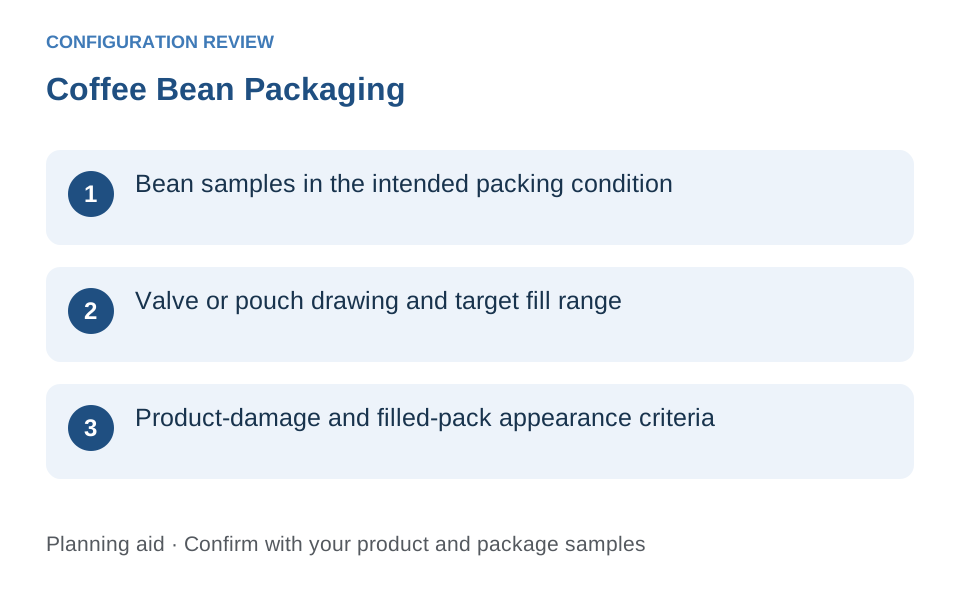
Interpret a bean-packaging demonstration
Request a trial matrix covering the combinations that create genuinely different demands: bean condition, target quantity, bag format and requested options. Observe replenishment and ordinary pauses as well as stable operation. Preserve samples with labels identifying the stage, material and configuration. Evaluate fill quantity, product condition, seals, valve placement and printed presentation as separate observations.
If nitrogen is included, keep the gas arrangement and finished-package assessments attached to the same record. Equipment hardware does not establish a universal shelf-life result. The company's quality and packaging teams need to assess the complete pack under the intended product and distribution conditions. A useful demonstration states its limits clearly, including any bean, film or optional function that has not yet been tested. This makes the remaining decision concrete rather than leaving it hidden behind an attractive video.
Questions to settle before ordering
Can one line make both a regular coffee bag and a quad-seal bag? Ask for the exact included format range and any separate forming or sealing arrangement; a shared vertical-machine description is not enough. Can the same setup fill ground coffee? Request a separate dosing and dust assessment rather than extending a bean trial to a powder. Can a premade pouch be changed freely? Confirm the opening, zipper and valve details for each supplied format.
The final enquiry should include the bean matrix, finished-pack samples, production pattern and factory layout. Show access for loading coffee and packaging material, and identify the downstream collection route. Ask for a quotation that distinguishes included components, tested combinations, proposed options and outstanding confirmations. That structure gives the roaster a practical basis for evaluating alternatives without depending on unsupported machine-wide claims.
Keep the roast schedule visible in layout planning
Show how coffee batches move from their holding containers to the proposed feed point. Include the space used to identify batches and replenish the line according to the factory's own process. The purpose is to make the proposed material route visible; an equipment footprint alone cannot show how a roaster will manage several products during a working day.
Connect that route with the planned packaging-material storage and finished-bag collection points. If the project changes from premade pouches to roll film, revisit those activities rather than changing only the central machine outline. A practical layout review helps the team compare how each packaging route fits the existing roasting operation and reveals interface questions before the order is finalized.
Prepare for a Configuration Review
- Bean samples in the intended packing condition
- Valve or pouch drawing and target fill range
- Product-damage and filled-pack appearance criteria
- Output trial with the requested options
Explore the Equipment
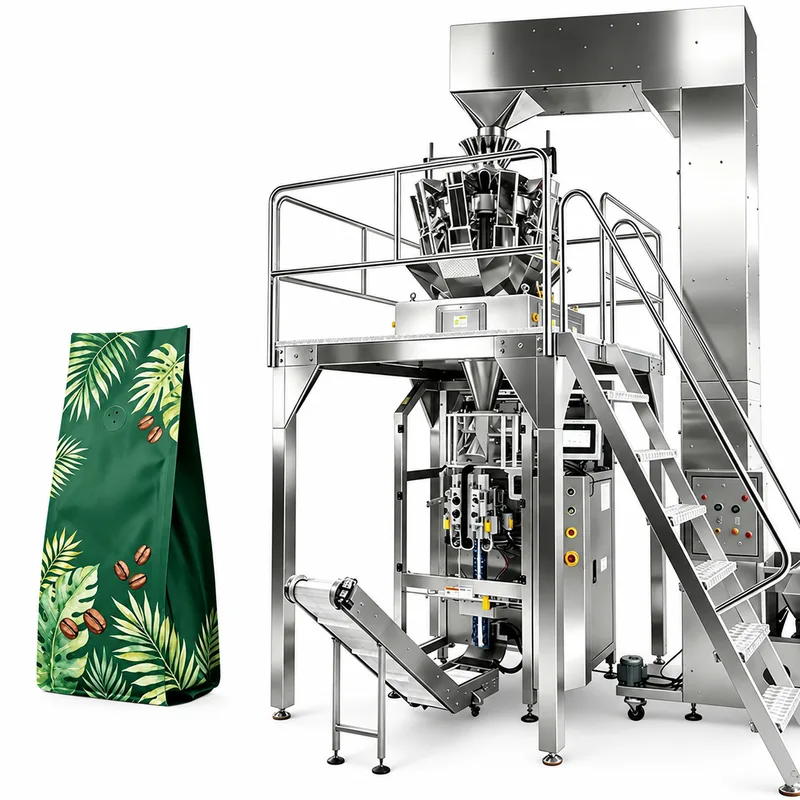
Vertical Form Fill Seal
Coffee Bean Valve-Pouch Packaging
Package roasted coffee beans with multihead weighing, vertical bag forming and an integrated degassing-valve option.
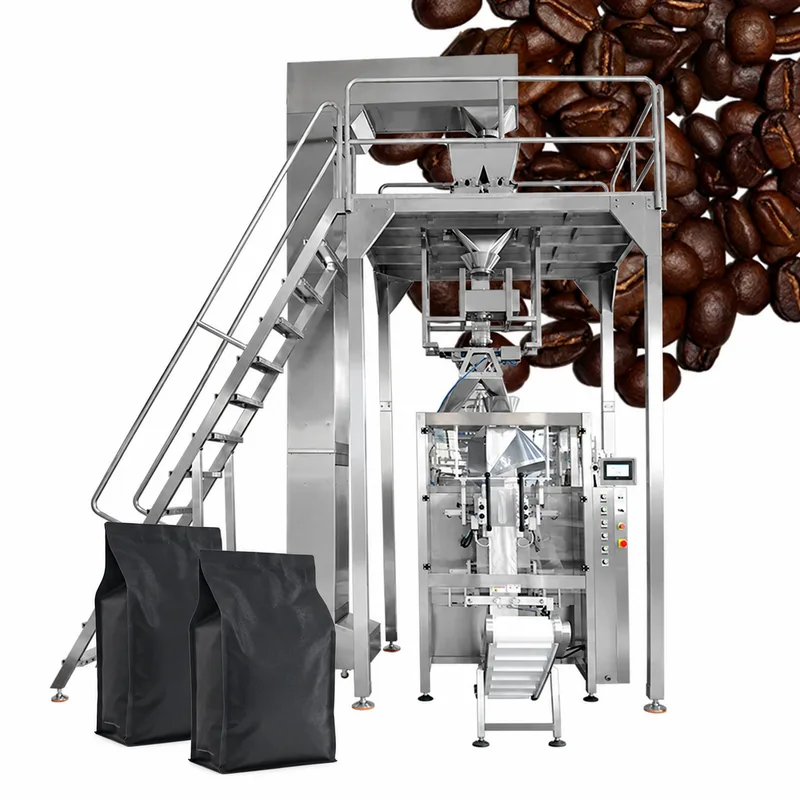
Vertical Form Fill Seal
Quad-Seal Coffee Packaging
Produce structured coffee bags with a vertical quad-seal configuration and a dosing system matched to the beans and pack size.
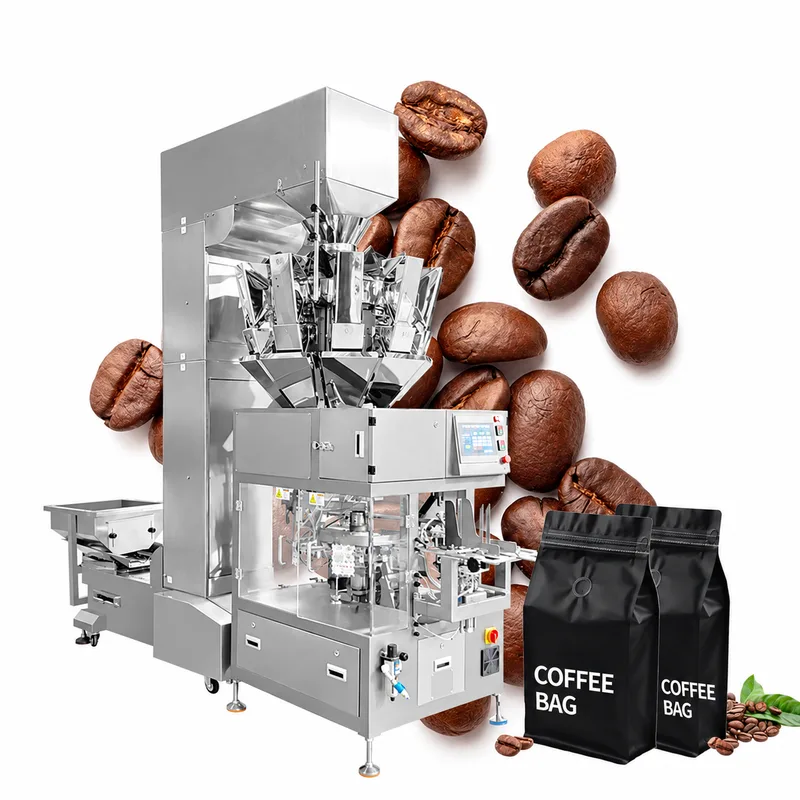
Premade Pouches
Coffee Bean Doypack Packaging
Premade doypack machine for coffee beans: picks and opens each stand-up pouch, weighs and fills the beans, then seals the top. Test it with your pouches.