
Mixed Nut Packaging
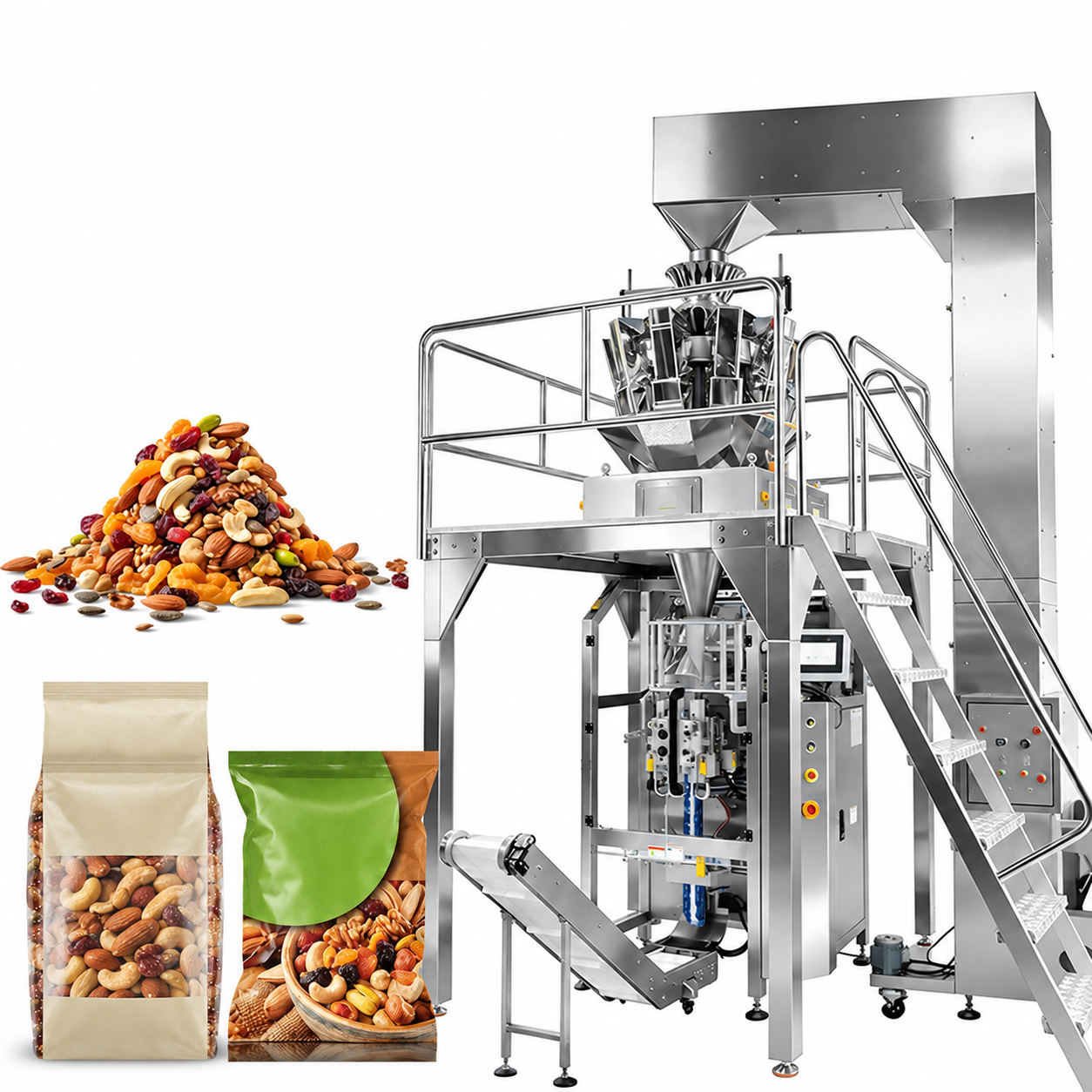
Mixed nut packaging: check ingredient distribution as well as total bag weight, and decide whether the line receives a finished blend or builds it.
Separate bagging scope from ingredient-blending scope
A mixed-nut project needs an explicit answer to one architectural question: does the packaging line receive a finished blend, or must it create the blend? The catalog's nut configuration provides a multihead weighing and VFFS route, while the premade-pouch range supplies an alternative bag-handling route. Neither package choice, by itself, defines separate ingredient supply or proportion control. Those functions need their own equipment description when they are part of the project.
Draw a simple material diagram with one box for each ingredient. If the factory delivers a premixed product, join those boxes before the packaging-line boundary and show a single incoming stream. If ingredients enter separately, keep the streams separate and ask the supplier to show where and how they are combined. Include any manual blending activity that remains outside the proposed machinery.
Use the same diagram when comparing quotations. It should be clear whether each price covers only weighing and bagging, additional ingredient feeders, or a wider blending arrangement. This protects the commercial comparison from a misleading situation in which two offers promise mixed-nut packaging but include substantially different production tasks.
Describe the mixture as separate ingredients
List each ingredient, its approximate proportion, size and surface condition. A bag meeting total weight can still contain an unwanted ingredient balance. State whether the mix arrives premixed or whether a separate feeding arrangement is required. Do not assume that a standard weigher configuration controls each ingredient independently.
Observe movement through the line
Different pieces can move differently during feeding and handling. Supply representative production mixtures and agree where samples will be collected. Review both the incoming mixture and finished bags to understand the effect of the proposed process. Ask the supplier to identify any additional equipment needed for your distribution requirement.
Agree two sets of checks
Record total fill quantity and the agreed ingredient-distribution measure separately. Also inspect sealing, product damage and the finished bag’s appearance. Describe how the samples represent the full run. The catalog’s nuts VFFS and premade-pouch options provide starting configurations, but the required mixture result needs its own assessment.
Decide what mixture consistency means commercially
A mixed-nut bag has at least two distinct targets: total quantity and the composition the customer expects to receive. Begin by describing the ingredients, their intended proportions and how variation will be judged. Some buyers focus on average composition across a production batch, while others need a defined check at individual-bag level. Make that distinction explicit before selecting feeding equipment or planning a trial.
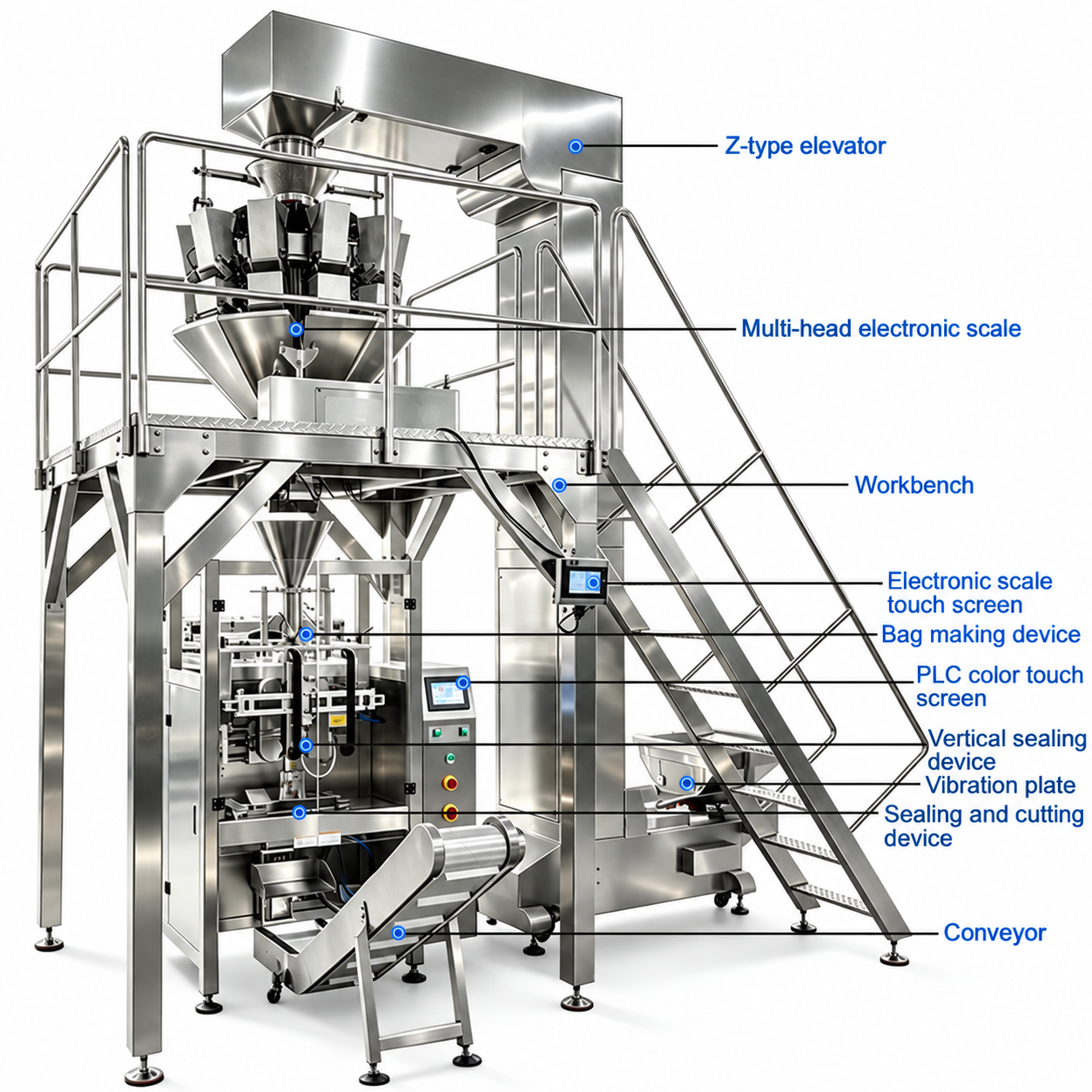
The catalog's nuts multihead VFFS and premade-pouch options provide possible packaging routes. Their presence does not prove that a standard arrangement independently meters every ingredient. Ask the supplier to explain where mixing occurs and what the proposed weigher measures. A clear answer should distinguish a premixed product passing through total-weight dosing from a configuration designed to introduce separate ingredients. This is a fundamental scope question, not a minor control setting.
Describe each ingredient in the blend
Create a simple ingredient record with piece size, shape, surface condition and the approximate range expected in production. Include broken pieces where they are part of the incoming material. A mixture of large nuts, small seeds and dried berries should not be represented only by a photograph of an attractive finished bag. The sample must show what will actually reach the feeder.
Explain whether the blend changes between recipes and whether all ingredients arrive premixed. For a hypothetical assortment with a small share of a valuable nut, state how that ingredient's distribution should be assessed. A total-weight result may hide a commercially important composition issue. The supplier needs this information to discuss feeding architecture and sample evaluation without making an unsupported promise that combination weighing automatically controls every component in the desired ratio.
Look for changes between the supply container and bag
Collect a reference sample from the incoming mixture using an agreed method, then compare finished bags from identified stages. Different shapes and sizes may move differently during feeding, so the evaluation should examine the proposed route rather than assuming the incoming blend remains identical everywhere. Include any elevator, distribution feeder and collection path within the review where they form part of the supplied line.
Record where material is retained and whether the mixture changes visibly near the end of a batch. The objective is to identify observations that warrant further investigation, not to assign a cause from one unusual bag. If composition varies, compare it with incoming variation and the timing of replenishment. This gives the supplier a useful basis for discussing changes to supply or feeding rather than responding only to a general complaint about inconsistent mixes.
Define a practical composition sampling method
Agree how ingredients will be distinguished during the trial. Depending on the blend and commercial question, the parties may choose to separate sample contents, count identifiable pieces or use another suitable recorded method. State the limitations of the chosen approach. A visual impression and a weighed ingredient breakdown provide different kinds of evidence, so they should not be reported as equivalent results.
Keep total fill quantity in a separate column from the mixture observation. Label samples by run stage and recipe, and preserve the records used to calculate any summary. Select a practical number of samples based on the agreed evaluation plan, rather than inventing a universal sample count in advance. If the buyer needs a tighter ingredient requirement than the proposed architecture demonstrates, list that as an unresolved configuration issue before accepting the quotation.
Choose film-roll bags or zipper pouches deliberately
A mixed-nut product can be presented in film-roll bags or premade zipper pouches within the available catalog routes. Provide the intended filled sample, dimensions and opening features. For a zipper pouch, review how the full mix clears the zipper and top seal, including its largest pieces. For VFFS, review the forming and discharge arrangement with the chosen bag volume.
The package should be evaluated with the actual mixture. Replacing it with uniform nuts can hide the behavior of small particles or sticky fruit near the sealing area. Examine product damage, trapped material and retail appearance separately from the total-weight and composition checks. If gas or another optional package function is requested, include the scope and trial conditions explicitly. A packaging format should not be used to imply unverified preservation or shelf-life outcomes.
Plan recipe changes around the mixture architecture
List the recipes expected on the line and identify what changes between them. A new printed bag with the same blend differs from a recipe that adds another ingredient or changes the proportion of a difficult component. Ask which parts, feeding arrangements and adjustments are proposed for each case. Confirm how the operator will identify the correct setup and how retained material is inspected under the planned cleaning process.
If independent ingredient feeding is proposed, ask how that specific arrangement will be demonstrated and documented. Do not assume it is included because a product page mentions mixed nuts. Record the actual supplied modules, their interfaces and any remaining manual work. A useful commercial comparison shows the whole configuration needed to meet the mixture requirement, allowing the buyer to compare alternatives without overlooking significant differences in scope.
Assemble a mixed-product acceptance package
The final record should combine the recipe definition, source-mixture sample, target quantity, bag specification and observed results. Include interruptions, replenishment events and configuration changes. Keep the weight and mixture findings separate even when both are acceptable. This allows future recipe changes to be reviewed against the correct evidence instead of treating one successful batch as approval for every assortment.
Can a regular multihead weigher preserve an exact ratio? Ask what the proposed architecture controls and require a trial against the stated requirement. Can a new ingredient be added later? Review its handling and the mixture method before confirming compatibility. For the initial enquiry, send ingredient samples, the premixed product if relevant and the intended package. Those materials make the discussion concrete and help distinguish a bagging project from a more extensive ingredient-dosing project.
Prepare for a Configuration Review
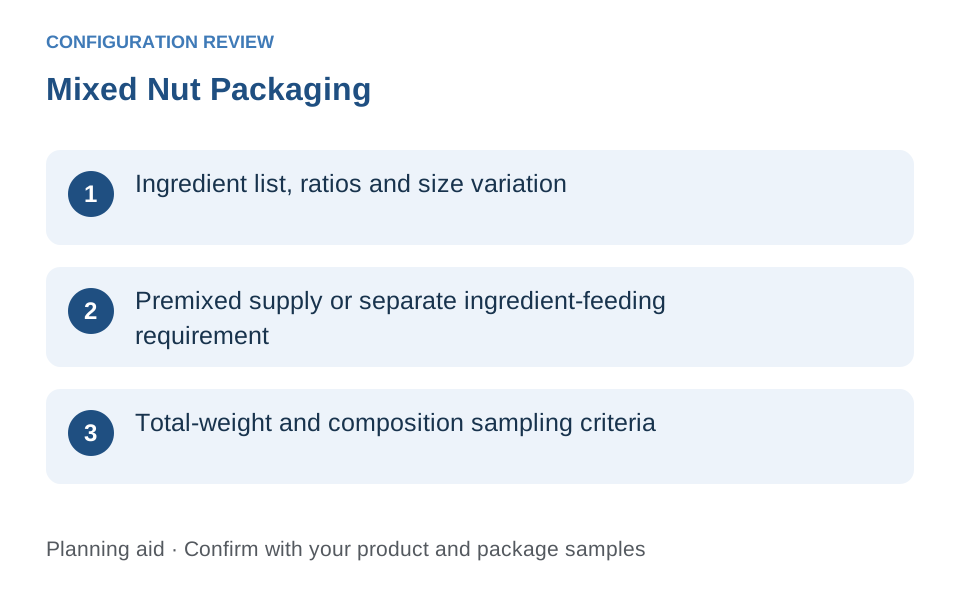
- Ingredient list, ratios and size variation
- Premixed supply or separate ingredient-feeding requirement
- Total-weight and composition sampling criteria
- Bag samples and intended run conditions
Explore the Equipment
Vertical Form Fill Seal
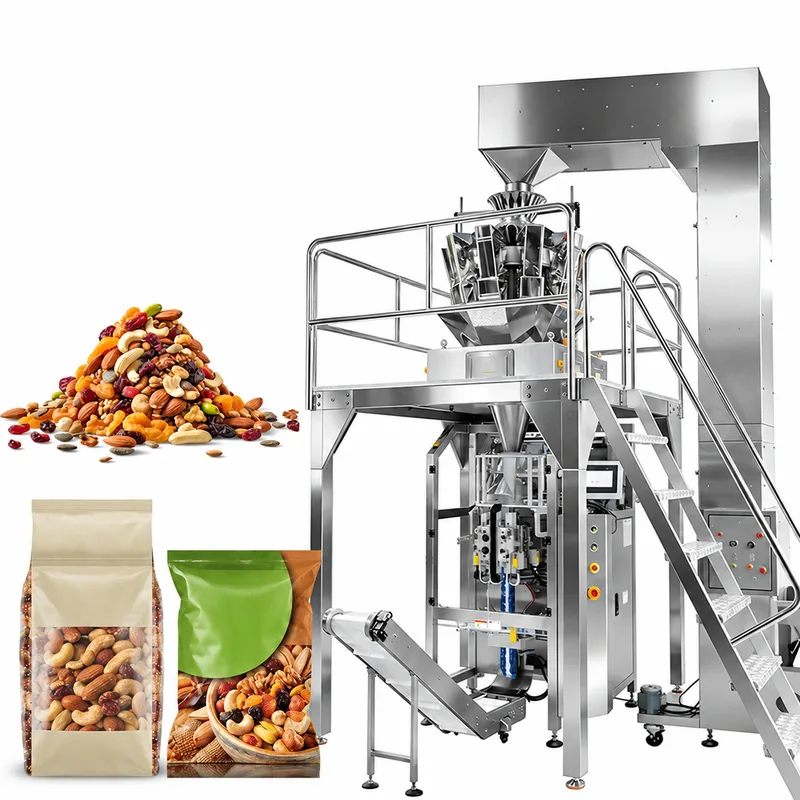
Nuts & Dried Fruit Multihead VFFS
Weigh and bag nuts, raisins, dried berries and snack mixes with a multihead weigher and vertical form fill seal machine.
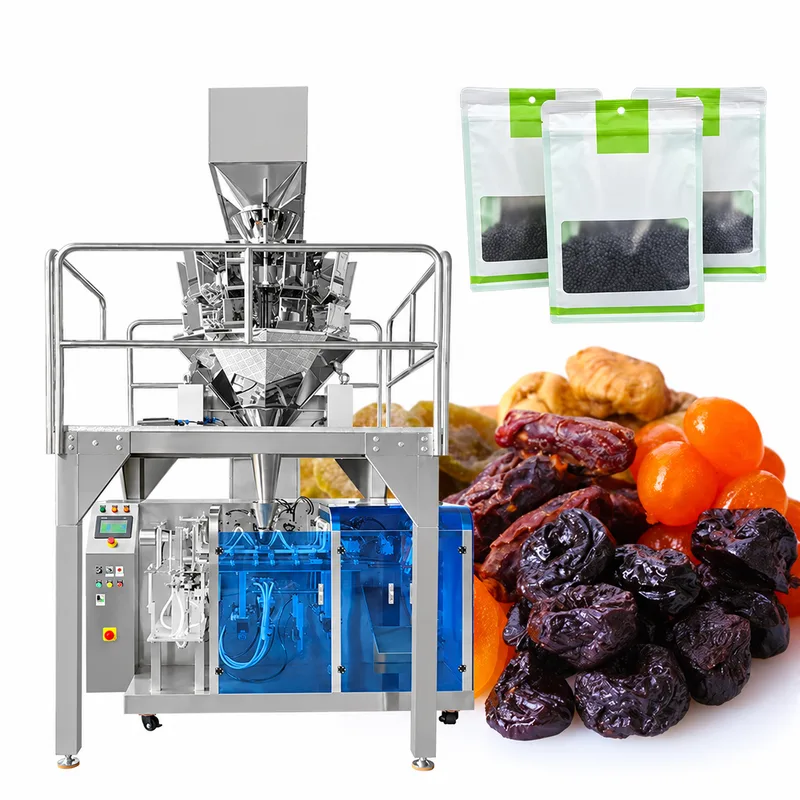
Premade Pouches
Fruit & Nuts Zipper-Pouch Packaging
Package dried fruit, nuts and other solid products into premade zipper pouches with automatic weighing and filling.